Your Harvest Cheat Sheet
- The Three Key Signals for Knowing When to Pick Cucumbers
- How Cucumber Type Changes the Answer to "When to Pick"
- Your Harvesting Action Plan: How to Pick Correctly
- The Domino Effect: How Harvesting Influences Your Whole Crop
- Navigating Common Problems and Questions
- Post-Harvest: Storing Your Perfect Pick
- Wrapping It Up: Trust Yourself
Let's be real. You've nurtured those little cucumber plants from seeds or seedlings. You've watered them, maybe talked to them (no judgment here), and fought off the occasional bug. Now you've got these promising green fruits dangling from the vine, and the big question hits you: when to pick cucumbers? Pick them too early, and they're tiny, underwhelming things. Wait too long, and you're left with a giant, seedy, bitter monster that's only good for the compost. Getting the timing right isn't just about size; it's about capturing that perfect moment of crispness, sweetness, and flavor that makes homegrown cucumbers so special.
I've been there, staring at the vine, poking and prodding, second-guessing myself. I've also made every mistake in the book, which is probably the best teacher. Through trial and error—and plenty of research from trusted sources like university agricultural extensions—I've learned that knowing when to pick cucumbers is a skill that blends observation, touch, and a bit of variety-specific knowledge.
This guide is meant to cut through the confusion. We're going to move beyond the vague advice and get into the specific, visual, and tactile cues your cucumbers give you. We'll cover all the common types, answer the questions that keep gardeners up at night, and help you harvest cucumbers at their absolute peak.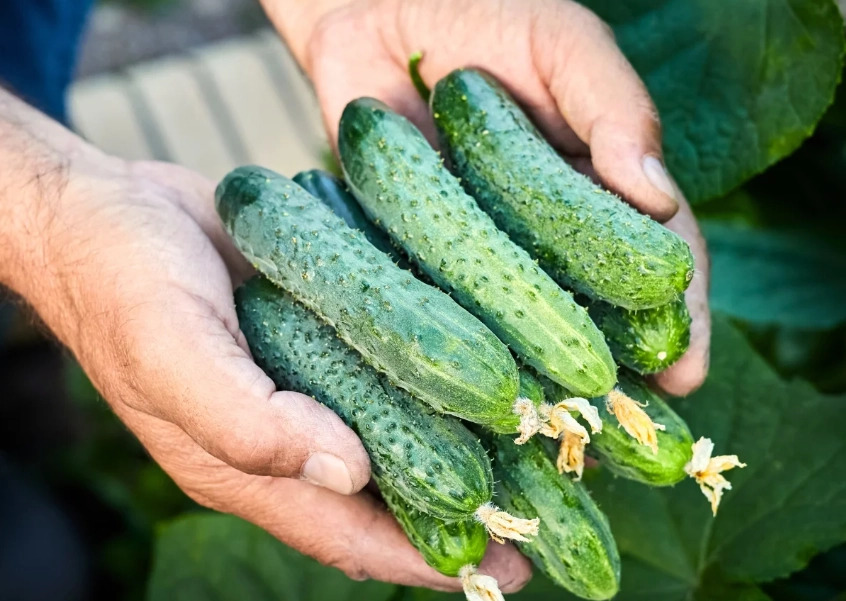
The Golden Rule: For most cucumbers, the goal is to harvest them while they are still immature, before the seeds fully harden and the skin becomes tough. A cucumber is not like a tomato or a peach; it doesn't get better if you let it "ripen" on the vine in the traditional sense. "Ripe" for a cucumber means "perfectly developed but still young."
The Three Key Signals for Knowing When to Pick Cucumbers
Forget complicated rules. Your cucumber will tell you it's ready through three main channels: how it looks, how it feels, and how long it's been growing. You need to check all three.
Signal 1: Color and Appearance
This is your first and most obvious clue. A cucumber ready for picking should have a uniform, deep green color. There shouldn't be any pale, yellowish patches (a sign it's overstaying its welcome). The color should be vibrant, not dull.
Look closely at the skin.
For many slicing varieties, the skin will be a consistent medium to dark green. Some heirloom varieties might have a lighter green or even white skin at maturity—know your variety! The key is consistency. A yellowing blossom end (the tip opposite the stem) is one of the earliest and most reliable signs that the cucumber is beginning to mature past its prime. If you see even a hint of yellow, it's time to harvest, immediately.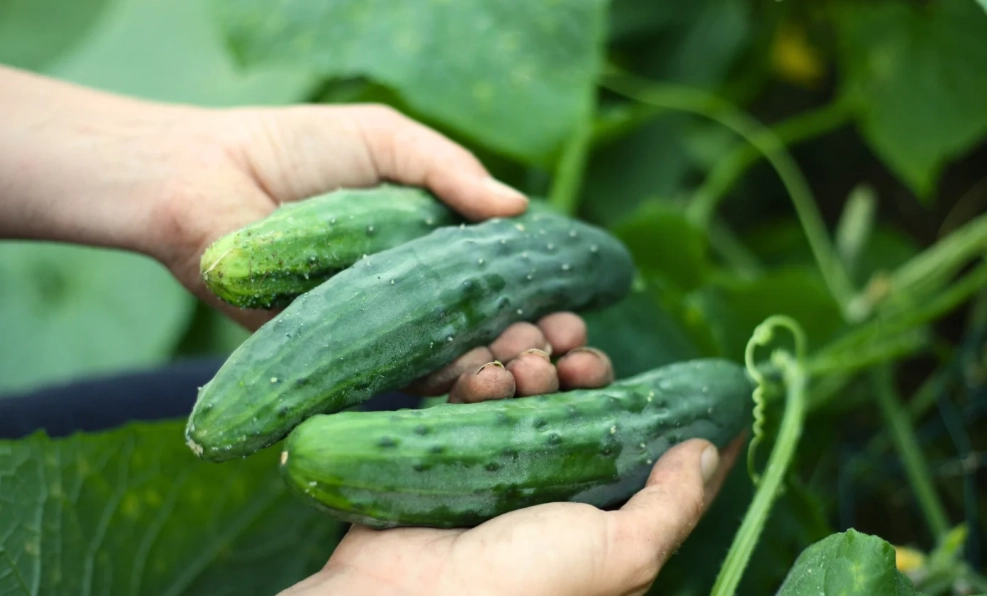
Signal 2: Size and Firmness
This is where most people get tripped up. Size matters, but it's not the only thing. The ideal size depends entirely on the type of cucumber you're growing.
- Slicing Cucumbers: These are your standard salad cukes. They're typically ready when they reach 6 to 8 inches in length and are about 1.5 to 2 inches in diameter. They should feel firm along their entire length.
- Pickling Cucumbers: For genuine, crisp pickles, you want them small. Harvest gherkin types when they are 1 to 3 inches long, and standard picklers at 3 to 5 inches. Any larger, and they become hollow and seedy, making for mushy pickles.
- Specialty Varieties: Long English or Persian cucumbers can be harvested at 10-12 inches, while round lemon cucumbers should be about the size of, well, a lemon (tennis ball size).
Now, about firmness. Give the cucumber a gentle squeeze. It should be firm and taut, with no soft spots. If it gives easily, it's likely overripe and starting to deteriorate inside. A perfect cucumber will feel dense and solid, like a firm vegetable should.
Pro Tip: The firmness test is crucial. I've picked cucumbers that were the "right" size but felt just a tad spongy near the stem end. Cutting into them revealed the seeds were already starting to enlarge. Trust your fingers as much as your eyes.
Signal 3: The Feel of the Skin
Run your fingers lightly over the cucumber. Young, ideal cucumbers often have small, tender bumps or spines. As they age, these can become much sharper and more pronounced. More importantly, the skin itself changes. A young cucumber's skin is tender and can be easily punctured with a thumbnail. An overripe cucumber develops a tough, waxy skin that is difficult to pierce.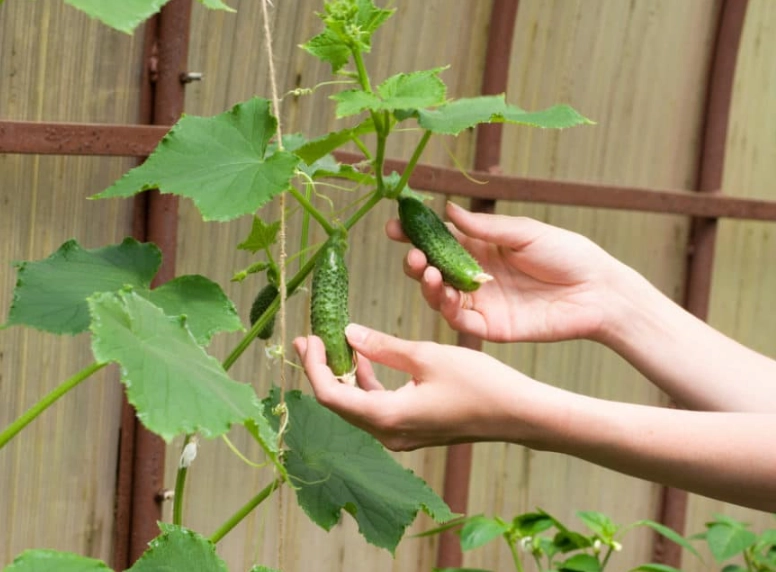
For many common varieties, if the skin has become so tough that you'd definitely want to peel it before eating, you've probably waited a bit too long. The sweet spot is when the skin is still edible and adds a pleasant texture.
Here’s a quick-reference table to help you match the type to the timing:
| Cucumber Type | Ideal Harvest Size | Key Visual/Tactile Cue | What Happens if Overripe? |
|---|---|---|---|
| Standard Slicing (e.g., Marketmore) | 6-8 inches long, ~2" diameter | Uniform dark green, firm to squeeze | Skin yellows, seeds harden, becomes bitter |
| Pickling (e.g., Boston Pickling) | 3-5 inches long | Bright green, spines still small | Blows out (becomes hollow), seeds large, poor pickle texture |
| Long English/Hothouse | 10-12 inches long, slender | Very dark green, perfectly straight | Can become rubbery and less flavorful |
| Lemon Cucumber | 2-3 inches diameter (round) | Pale yellow to light yellow color | Turns deep yellow, skin toughens, flavor fades |
| Persian Cucumber | 5-6 inches long, slender | Dark green, almost black, very firm | Loses its signature crispness and sweet flavor |
How Cucumber Type Changes the Answer to "When to Pick"
You can't just have one rule. A pickling cuke and a burpless slicer are playing by different rules. Knowing your variety is half the battle.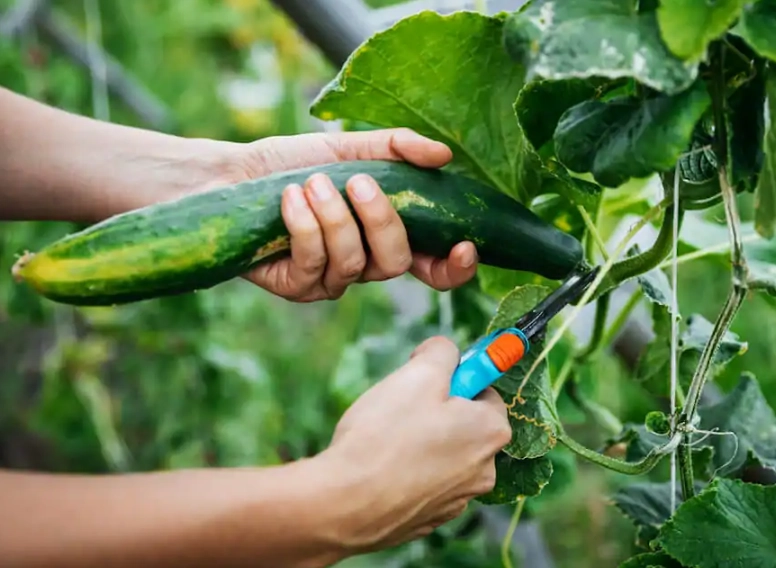
For pickling cucumbers, the mantra is "smaller is better." I used to let mine get too big, thinking I'd get more yield. Wrong. The best dill pickles come from small, dense, seedless cucumbers. Resources from institutions like the University of Minnesota Extension emphasize frequent harvesting for picklers to keep the plant producing and to ensure ideal texture. If you see the blossom end starting to bulge (a sign the seeds are developing), you've missed the prime window.
Slicing cucumbers are more forgiving on size, but not on condition. You can let them get to the higher end of their range if you want bigger slices. But you must vigilantly watch for color change and test firmness. A common mistake is thinking a giant cuke is a prize. In my experience, it's usually a disappointment—watery, seedy, and often bitter.
Specialty varieties have their own quirks. Lemon cucumbers are ripe when they turn from green to a soft, buttery yellow—not when they're green like a regular cuke. Armenian cucumbers, which are actually a melon, are best when they are pale green, slender, and about 12-15 inches long. If they start to develop orange tints, they're past it.
The Bitterness Trap: This is a huge user pain point. Bitterness in cucumbers is often caused by stress (uneven watering, high temperatures) but can be concentrated in the stem end and skin of overripe fruits. Harvesting at the right time, before the plant compounds that cause bitterness (cucurbitacins) fully develop in the fruit, is a key defense. If you've ever bitten into a beautiful-looking cucumber only to get a mouthful of bitter nastiness, improper harvest timing might be part of the culprit.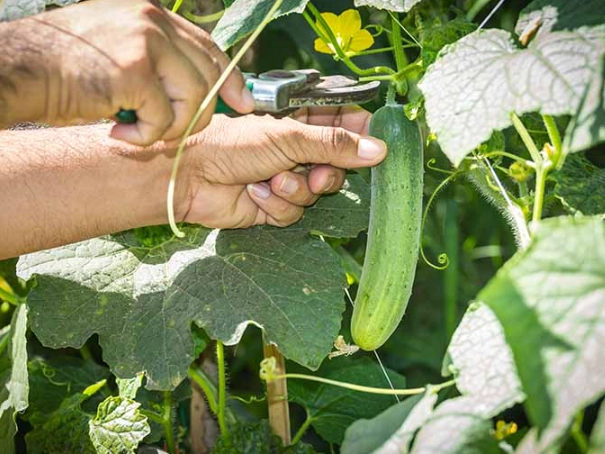
Your Harvesting Action Plan: How to Pick Correctly
So you've identified a perfect candidate. Now what? Don't just yank it off the vine!
Use a sharp pair of garden shears, scissors, or a knife. Leave about a quarter to a half inch of the stem attached to the cucumber. Why? Pulling or twisting can damage the delicate vine, opening it up to disease and potentially halting the production of other fruits on that stem. Cutting cleanly is much safer for the plant.
Be gentle with the vine.
Handle the harvested cucumbers carefully to avoid bruising. Get them out of the sun and into a cool place as soon as possible. Their quality starts to degrade from the moment they're picked, and heat accelerates that.
The Domino Effect: How Harvesting Influences Your Whole Crop
Here's something many beginners don't realize: your harvesting habits directly control your plant's behavior. A cucumber plant's main biological goal is to produce mature seeds for reproduction. If you leave a fruit on the vine to fully mature, the plant gets the signal that its job is done and will dramatically slow down or even stop producing new flowers.
By consistently harvesting fruits while they are young (in the plant's reproductive terms), you trick the plant. It thinks, "Oh no, my seeds didn't make it! I need to try again!" This triggers it to produce more and more flowers and fruits in an effort to complete its lifecycle. Regular harvesting is the single best way to maximize your yield over the entire season.
Make it a habit to check your plants every day or two during peak season. Cucumbers can seemingly double in size overnight, especially in warm, wet weather. Missing a fruit for just a couple of days can mean the difference between a perfect harvest and an overripe one.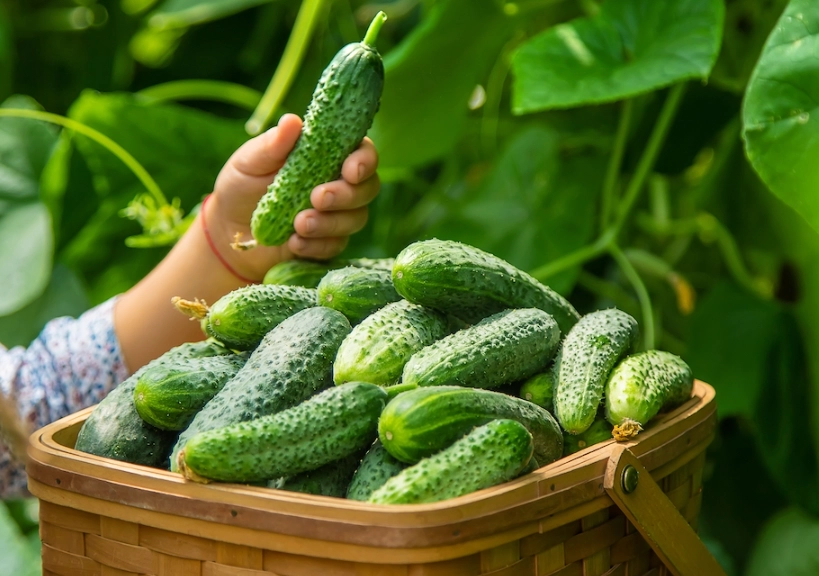
Navigating Common Problems and Questions
Even with the best guidelines, you'll run into oddballs. Let's tackle some frequent head-scratchers.
What if my cucumber is already yellow?
You waited too long. A fully yellow cucumber is mature, with hard seeds and tough skin. It's often bitter. You can try scooping out the seeds and using the flesh in a cooked recipe (like a relish or soup), but for fresh eating, it's past its prime. Compost it and let it be a lesson for next time. The plant has put a lot of energy into it, so removing it is still helpful.
Why are my cucumbers fat but short?
This is often due to incomplete pollination. A cucumber fruit develops around each fertilized seed. If only a few seeds at the blossom end get pollinated, that end swells while the rest doesn't. It's still edible if harvested at the right color and firmness, but the shape is off. To prevent it, encourage pollinators or consider hand-pollinating.
Can I pick cucumbers when they're wet?
It's best to avoid it if you can. Harvesting when the foliage is wet (from dew or rain) can spread fungal diseases like powdery mildew or downy mildew from leaf to leaf as you brush against them. If you must harvest in the morning dew, try to be extra careful and maybe wash your tools afterwards. The Penn State Extension articles on cucumber production often highlight moisture management as key to disease prevention.
What's the best time of day to pick?
Early morning is ideal. The fruits are cool, crisp, and fully hydrated from the night. Harvesting in the heat of the afternoon can lead to quicker wilting. I find my morning-harvested cukes stay crunchy in the fridge for days longer.
Post-Harvest: Storing Your Perfect Pick
You did it! You've mastered when to pick cucumbers. Now, don't ruin them with bad storage.
Cucumbers are tropical plants and hate the cold. Storing them in the coldest part of your fridge (usually the back) can cause chilling injury—those ugly, sunken, water-soaked spots. The ideal storage temperature is a surprisingly warm 50-55°F (10-13°C).
Since most fridges are around 37°F (3°C), the best compromise is to store them in the warmest part—often the crisper drawer, and for not too long. Try to eat them within 3-5 days for peak quality. Do not wash them until you're ready to use them, as moisture speeds up decay.
If you have a cool, dark basement or cellar that stays in that 50°F range, they'll keep much better there than in the fridge.
My Personal Storage Hack: I place dry, unwashed cucumbers in a loosely closed plastic bag or a reusable container with a dry paper towel to absorb any excess moisture. This keeps them crisp in the fridge for nearly a week without chilling damage, as long as they're not shoved against the back wall.
Wrapping It Up: Trust Yourself
Figuring out when to pick cucumbers might feel fussy at first, but it quickly becomes second nature. Start with the guidelines for your variety—check the seed packet, it usually has good info—then let the fruit's color, firmness, and size be your final judges.
The most important thing is to get out there and start looking, touching, and harvesting. You'll learn more from picking one slightly overripe cucumber than from reading ten articles. Your plants and your taste buds will thank you for it. There's nothing quite like the satisfaction of slicing into a cucumber you grew and picked at the perfect moment, knowing it's going to be crisp, sweet, and absolutely nothing like the bland, waxed ones from the supermarket.
Happy harvesting!
Reader Comments