Quick Guide
- Why Bother with a Butternut Squash Trellis Anyway?
- Choosing Your Champion: Types of Butternut Squash Trellises
- Building Your Own A-Frame Butternut Squash Trellis: A Step-by-Step Walkthrough
- The Art of Training and Supporting Your Squash
- Common Problems and How to Solve Them on a Trellis
- Beyond the Basics: Watering, Feeding, and Harvesting on a Trellis
- Frequently Asked Questions (The Stuff You Actually Want to Know)
Let's be honest. Butternut squash plants are space hogs. Those sprawling vines can take over half your garden if you let them, leaving no room for your tomatoes or beans. I learned this the hard way my first year gardening. I planted three little squash seedlings, thinking "how big could they get?" Two months later, it looked like the squash plants were trying to annex my lawn. That's when I discovered the magic of a butternut squash trellis.
Growing butternut squash vertically isn't just a space-saving trick. It changes everything. Better air circulation, fewer pest problems, cleaner fruit, and honestly, it just looks cool. A wall of lush green leaves with those beautiful tan fruits hanging down? It's a garden showstopper.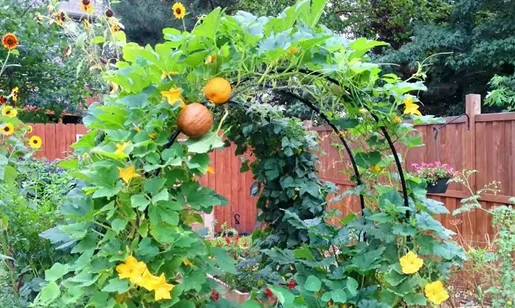
Here's the thing most guides don't tell you: Not all squash trellises are created equal. That flimsy tomato cage from the big-box store? It'll collapse under the weight of a mature butternut squash by mid-season. I've seen it happen (and yeah, it was my trellis that collapsed).
Why Bother with a Butternut Squash Trellis Anyway?
You might be thinking, "My grandparents never used a trellis, and their squash did just fine." True. But they also had acres of land. Most of us are working with backyard plots, raised beds, or even containers. Every square foot counts.
Think about what happens when squash vines crawl on the ground. The leaves stay damp longer after rain or watering. Damp leaves are like a welcome sign for powdery mildew and other fungal diseases. The fruits themselves sit on moist soil, which can lead to rot, especially on the bottom where they touch the ground. And let's not forget the slugs, squash bugs, and other critters that find ground-level squash an easy target.
Now picture those same vines growing up a sturdy butternut squash trellis. The leaves dry faster. The fruits hang in the air, developing evenly on all sides. You can actually see what's happening with your plants. Pest inspection becomes a breeze instead of a jungle expedition.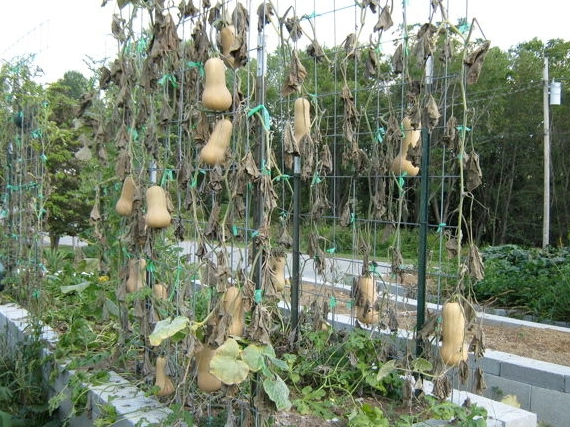
And the space I saved? I planted an entire extra row of greens in the footprint those sprawling vines would have taken.
But here's where people get nervous. "Won't the stems break?" "How do you support those heavy fruits?" These are valid concerns. A butternut squash can weigh several pounds. The answer lies in choosing the right type of trellis and using proper support techniques.
Choosing Your Champion: Types of Butternut Squash Trellises
This is where your project can go right or wrong. Picking the wrong structure is the number one mistake gardeners make. I've made most of these mistakes myself, so learn from my failed experiments.
| Trellis Type | Best For | Pros | Cons (The Real Talk) | My Personal Rating |
|---|---|---|---|---|
| A-Frame Trellis | Mid-sized gardens, great stability | Extremely sturdy, double-sided growing, classic look | Takes up more space than a flat trellis, can be tricky to build perfectly square | 9/10 - My go-to for reliability |
| Arched Trellis | Garden pathways, decorative gardens | Beautiful, creates a tunnel effect, very strong arch shape | Can be expensive if bought pre-made, requires careful bending of materials | 8/10 - Gorgeous but a project |
| Flat Wall Trellis | Against fences, walls, or the north side of a garden | Space-efficient, easy to attach to existing structures | Requires a very strong anchor point, can shade plants behind it | 7/10 - Good solution for tight spaces |
| Teepee Trellis | Quick setup, container gardening | Fast to assemble, good for single plants, portable | Not as sturdy for multiple heavy fruits, can tip in wind | 6/10 - Okay for a trial run |
| Cattle Panel Arch | The serious gardener wanting max durability | Nearly indestructible, perfect curved shape, lasts decades | Panels are heavy and sharp, require strong posts, initial cost higher | 10/10 - The ultimate if you can handle it |
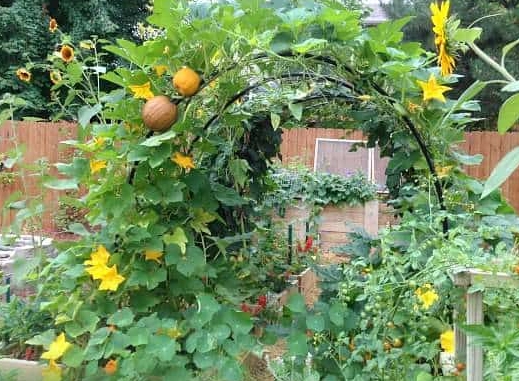
See that last one? The cattle panel arch. Let me tell you, after my tomato cage debacle and a slightly wobbly A-frame I built from scrap wood, I finally invested in a cattle panel. Bought it from the local farm supply store, bent it into an arch over my garden path, and secured it with T-posts. That thing isn't going anywhere. It laughs at wind storms. It held eight butternut squash plants last season without a complaint. It's the tank of the squash trellis world.
Materials Matter: What to Use (and What to Avoid)
Wood, metal, PVC, string? The options can be overwhelming. Your material choice depends on your budget, how permanent you want the structure, and your DIY comfort level.
Wood: Cedar and redwood are naturally rot-resistant and look fantastic. Pressure-treated lumber works too, but some gardeners prefer to avoid it near edible plants. Pine is cheaper but will rot in a few years unless you treat it. I used untreated cedar 2x2s for my first A-frame. It lasted four seasons before showing real wear. Not bad.
Metal: Conduit pipe (EMT) is lightweight, cheap, and easy to work with. You can bend it into arches with a simple conduit bender. Galvanized steel pipe is heavier and more expensive, but it's what you want for a lifetime structure. Cattle panels, as mentioned, are the gold standard for strength. Just wear gloves—the cut ends are sharp.
What about the climbing surface? The vines need something to grab onto. You can't just use a smooth board. Here's where garden netting, trellis netting, or even a simple grid of horizontal wires or strong twine comes in. I'm a fan of the heavy-duty plastic netting with 6-inch squares. It's UV-resistant, and the squash tendrils cling to it easily. Some people use welded wire fencing (like hardware cloth with 2x4 inch openings). It works, but it's more expensive and harder to cut.
Building Your Own A-Frame Butternut Squash Trellis: A Step-by-Step Walkthrough
Let's build the workhorse of vertical squash growing. An A-frame is stable, relatively easy, and you can make it any size. I'll give you the dimensions I've found work best after a few iterations.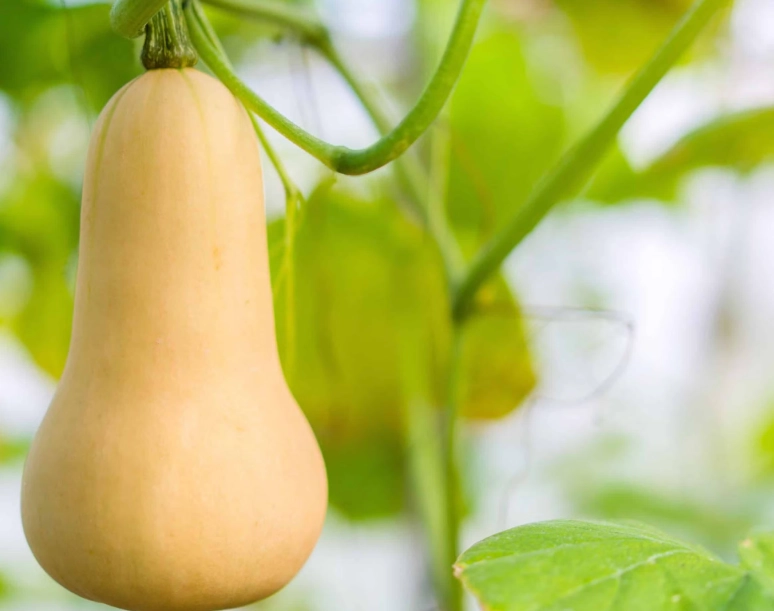
What You'll Need:
- Wood: Four 8-foot long 2x2s (cedar is ideal)
- Hardware: 3-inch exterior wood screws, a handful of 2-inch screws
- Cross Supports: One 8-foot long 1x2 or another 2x2
- Climbing Surface: A roll of heavy-duty plastic garden netting (at least 5 feet wide)
- Tools: Drill, saw, measuring tape, staple gun (optional but helpful)
- Optional but Recommended: Two metal fence post stakes for ground anchoring
First, take two of your 8-foot 2x2s. These will be the legs of one side of your A. Lay them on the ground, parallel, about 4 feet apart at the bottom. Now, take your cross support wood (the 1x2 or 2x2). Cut it to 4 feet long. This will be the top crossbar. Attach it to the top of your two legs using the 3-inch screws, creating a tall, narrow "U" shape. Repeat this process with the other two legs to make a second identical side.
Now you have two sides. Stand them up and lean them together to form an 'A'. The tops should meet, and the bottoms should be spread about 4 feet apart for a stable base. This is the trickiest part—you need a helper or some clever propping. Screw the two sides together at the top where they meet. Use several screws for a strong connection.
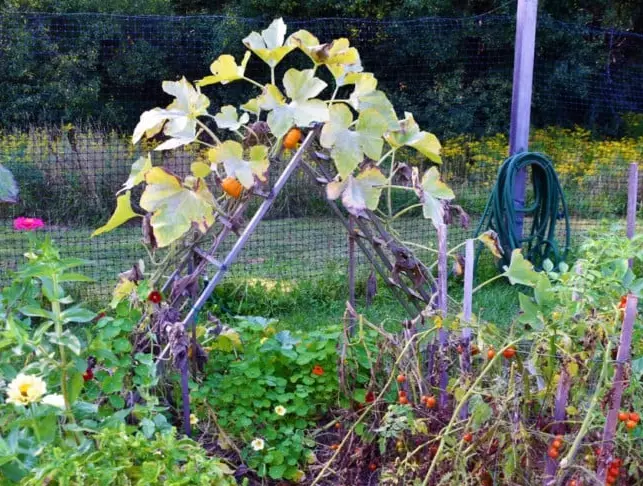
For extra stability, add a horizontal brace about halfway down each side. Just cut a piece of scrap wood to fit between the legs on one side and screw it in. Do the same on the other side. This keeps the legs from bowing inward under load.
Now for the netting. Unroll it and drape it over the A-frame. You want it to cover from near the top crossbar down to about a foot from the ground on each side. Use a staple gun to secure it to the wood frame every 8-10 inches. Pull it taut, but not drum-tight—you want a little give. If you don't have a staple gun, you can use a hammer and galvanized fence staples, or even zip ties looped through the netting and around the wood.
Finally, placement. Position your butternut squash trellis where it will get full sun (at least 6-8 hours). Butternut squash are sun lovers. Drive those metal fence post stakes into the ground on the inside of each leg, near the bottom, and screw the legs to the stakes. This prevents the whole thing from sliding or tipping over once the vines get heavy, especially in a storm.
The Art of Training and Supporting Your Squash
Building the trellis is only half the battle. Now you have to convince the plant to use it. Squash vines are natural ground crawlers. They won't automatically start climbing. You need to be a gentle guide.
Plant your squash seedlings or sow your seeds at the base of the trellis, on one side. When the main vine starts growing and reaches about 12-18 inches long, that's your cue. Gently take the growing tip and lean it against the netting. You might need to use a soft plant tie or a piece of old cotton cloth to loosely tie it in place. Don't cinch it tight—just a loose loop to encourage it.
The secret weapon? Squash plants have these little curly tendrils. Once the vine touches the netting, those tendrils will start reaching out and grabbing on. Your job is just to make the introduction. As the vine grows longer, keep gently weaving it through the netting openings. Don't force it. Just point it in the right direction.
The Million-Dollar Question: How Do You Support the Heavy Fruits?
This is the part that worries everyone. A butternut squash can easily weigh 3-5 pounds. The vine stem can't hold that weight horizontally. The fruit will either break off or tear the vine from the trellis. The solution is simple: slings.
When a female flower is successfully pollinated and the little fruit starts swelling behind it (that's the ovary), start planning. Once the fruit is about the size of a baseball, it's time for a sling. You can buy stretchy mesh produce bags, or make your own from old nylon stockings, t-shirt fabric, or even onion bags.
Create a hammock. Slide the fabric under the growing squash and tie the ends securely to the trellis above. The sling should cradle the fruit, taking the weight off the stem. Leave enough slack so the fruit can still grow, but not so much that it sways and strains the connection point. Check the slings every week and loosen them as the fruit expands.
What about pollination? When your plants are up on a trellis, bees and other pollinators still find them just fine. In fact, the flowers might be more visible. But if you're worried, or if you notice small fruits turning yellow and falling off (a sign of poor pollination), you can hand-pollinate. It's easy. In the morning, take a male flower (the one on a skinny stem), peel back its petals to expose the pollen-covered stamen, and gently rub it on the center of a female flower (the one with a tiny fruit at its base).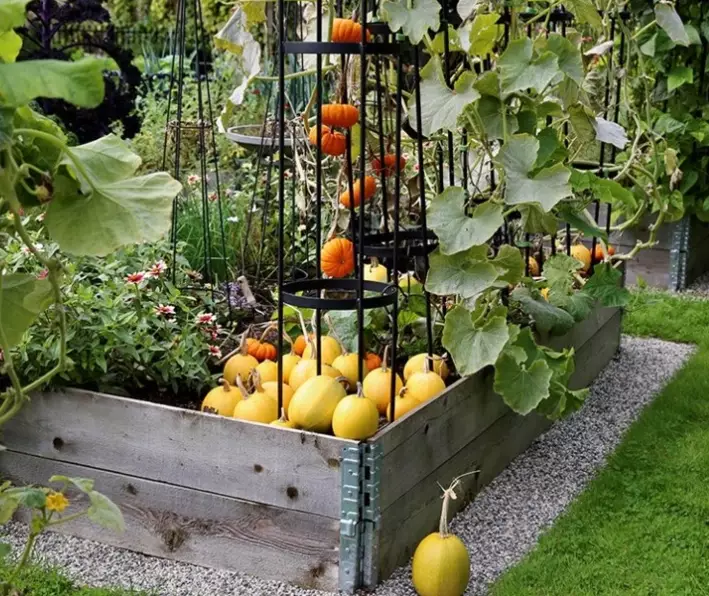
Common Problems and How to Solve Them on a Trellis
Growing vertically solves some problems but presents a few new ones. Let's troubleshoot.
Beyond the Basics: Watering, Feeding, and Harvesting on a Trellis
Your watering game needs to adjust. Water tends to run down a vertical plant faster. You need to ensure water is reaching the roots at the base. Use a soaker hose or water slowly at the base of the plant, not with a sprinkler over the leaves. Mulch heavily around the base to retain moisture. I use straw or shredded leaves.
Feeding is crucial. A heavy-producing vine needs fuel. I side-dress with compost or a balanced organic fertilizer when the vines start to run, and again when the first fruits set. Don't overdo nitrogen, though, or you'll get all leaves and no fruit.
Harvesting from a butternut squash trellis is a joy. No bending over, no searching under leaves. The fruits are right there. Wait until the skin is a deep, uniform tan and hard—your thumbnail shouldn't dent it. The stem will start to brown and dry. Use pruning shears to cut the stem, leaving an inch or two attached to the fruit. Don't carry it by the stem—it can break off and create a wound that leads to rot.
Cure your harvested squash in a warm, dry, well-ventilated spot (like a sunny porch) for 10-14 days. This hardens the skin and heals minor scratches. Then store them in a cool (50-55°F), dry place. Properly cured and stored butternut squash from your trellis can last for months.
Frequently Asked Questions (The Stuff You Actually Want to Know)
Look, starting a butternut squash trellis project might seem like extra work upfront. It is. Cutting wood, screwing things together, wrestling with netting. But that work pays dividends all season long. You'll spend less time battling diseases, less space wasted, and you'll get a harvest that's easier to manage and often of higher quality.
My advice? Start simple. Build that A-frame. Plant two seedlings. Be the gentle guide for the vines. Make slings from an old t-shirt. See how it goes. I bet you'll look at that vertical jungle of green and gold and wonder why you ever let squash run wild on the ground. Happy building, and happier growing.
Reader Comments