Key Sections
- What Actually Determines the Calories in Your Soup?
- Breaking Down the Numbers: From Cans to Homemade
- How to Calculate Calories in YOUR Homemade Soup (The Right Way)
- Making a Lighter, Lower-Calorie Version That Doesn't Taste Like Sadness
- Answering Your Burning Questions (The FAQ Bit)
- Beyond the Calories: The Nutritional Big Picture
- The Final Ladle
Let's be honest. You're here because you typed "calories in ham and split pea soup" into Google, hoping for a simple number. Maybe you're tracking your intake, maybe you're meal prepping, or maybe you just had a huge, delicious bowl and a little voice in your head went, "Hmm, I wonder."
Here's the thing they don't tell you on most recipe sites: the answer is almost never simple. I can't just give you one number. If I did, I'd be lying to you. The calories in ham and split pea soup swing wildly—anywhere from a relatively light 200 calories per cup to a hearty, stick-to-your-ribs 400 calories or more. It's frustrating, I know. You want a straight answer.
That's why we're going deep. We're not stopping at a single, misleading figure. We're going to tear apart the bowl, look at every ingredient, and understand what makes the calorie count go up or down. By the end of this, you'll be able to look at any recipe or restaurant menu and make a pretty darn good guess. You'll also know how to make a version that fits your goals, whether that's cutting back or fueling up.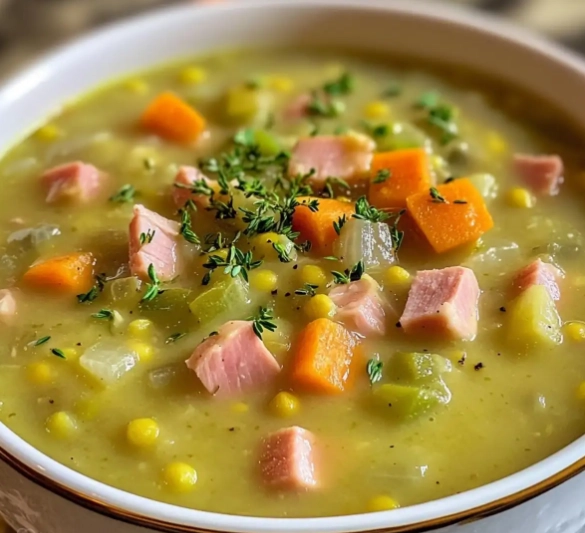
The Big Picture: Think of ham and split pea soup as a nutritional variable, not a constant. The final calorie count is a negotiation between the chef (or you), the ingredients chosen, and the portion served. A creamy, ham-heavy restaurant version is a totally different beast from a lean, brothy homemade pot.
What Actually Determines the Calories in Your Soup?
Forget the recipe for a second. Let's talk ingredients and choices. These are the real levers that control the final number.
The Ham: The Biggest Wild Card
This is usually the main source of fat and, therefore, a major calorie driver. The type of ham changes everything.
A ham hock or shank is the traditional choice. It's flavorful, cheap, and makes a great broth. But it's also mostly bone, fat, and skin. You're simmering all that fat into the soup, and if you shred the meat from it, that meat is often quite fatty. On the other hand, using diced, lean cooked ham (like a center-cut slice you chop up) adds protein with less fat. Then there's the in-between stuff—leftover holiday ham with a fat cap, pre-diced ham from the store (which often has added water and sometimes sugar).
My personal rule? If I'm using a ham hock, I chill the soup overnight. The next day, I scrape off the solid layer of fat that forms on top. It's a game-changer. You keep the smoky flavor but ditch a ton of calories. It's a bit of a hassle, but it works.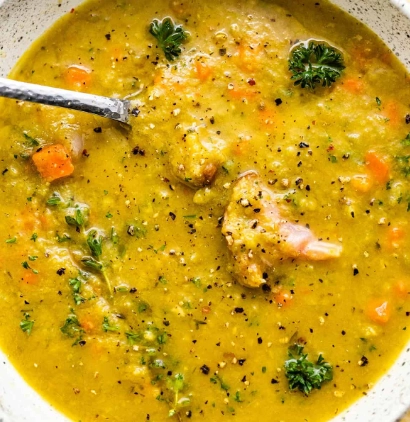
The Peas: The Surprisingly Stable Foundation
Dried split peas are actually the most predictable part. They're packed with protein and fiber, and their calorie density is fairly fixed. One cup of dried split peas (which makes a lot of soup) has about 700 calories. But here's the kicker—that cup gets diluted across an entire pot. The more water or broth you add, the fewer calories from peas per bowl. So a thicker, pea-heavier soup will be more calorie-dense than a brothy one.
The Liquid and The "Extras"
Water is zero calories. Basic vegetable or chicken broth is very low. But if you start using a cream-based broth, or worse, decide to finish the soup with a splash of heavy cream or a butter roux to thicken it... well, you see where this is going. Some recipes call for a potato blended in to thicken it, which adds carbs and calories. Others might add carrots, celery, onions—these are low-calorie volume boosters that are your best friends if you're watching your intake.
And let's not forget the toppings. A sprinkle of croutons, an extra handful of diced ham on top, a dollop of sour cream... these are classic "calorie creep" moments.
"The single biggest mistake people make when estimating calories in ham and split pea soup is forgetting the fat that renders out of the ham. You're not just eating the meat; you're drinking the broth it cooked in."
Breaking Down the Numbers: From Cans to Homemade
Okay, enough theory. Let's look at some real ranges. This table should give you a concrete starting point. Remember, a "cup" is 8 fluid ounces, but soup cups can be bigger. Always check serving sizes.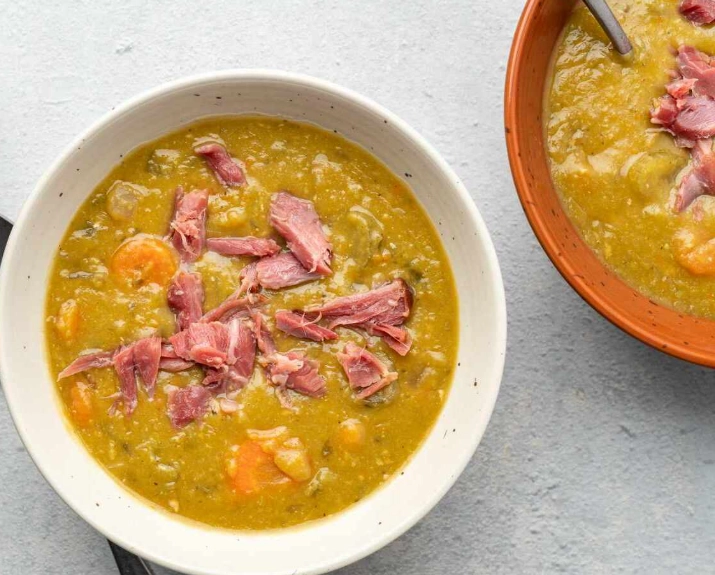
| Type of Soup | Serving Size | Estimated Calories | Key Factors & Notes |
|---|---|---|---|
| Canned, Condensed (e.g., Campbell's) | 1 cup (as prepared with water) | ~180-220 | Often thinner, less actual ham. High in sodium. Consistent but processed. |
| Typical Restaurant Bowl | 1 bowl (~12-16 oz) | ~350-500 | Usually richer, creamier, more ham. Portions are large. The biggest variable. |
| Homemade, Lean Recipe | 1 cup (8 oz) | ~200-280 | Uses lean ham, skims fat, more veggies, broth-based. What I aim for. |
| Homemade, Traditional Recipe | 1 cup (8 oz) | ~280-380 | Uses ham hock with fat, may include potato or butter. Hearty and flavorful. |
| "Loaded" Homemade Version | 1 cup (8 oz) | ~400+ | Includes cream, butter, extra ham chunks, bacon garnish. A sometimes food. |
See what I mean? The calories in a ham and split pea soup recipe aren't a fact; they're a choice. That canned soup might look low-cal, but I find the flavor pretty flat and the sodium through the roof. The restaurant bowl is a treat. The homemade versions are where you have control.
Honestly, the commercial ones often skimp on the ham. You get the pea flavor and salt.
How to Calculate Calories in YOUR Homemade Soup (The Right Way)
If you're serious about knowing, you have to do a little math. Don't worry, it's simple. This is the only way to get a truly accurate count for your specific pot.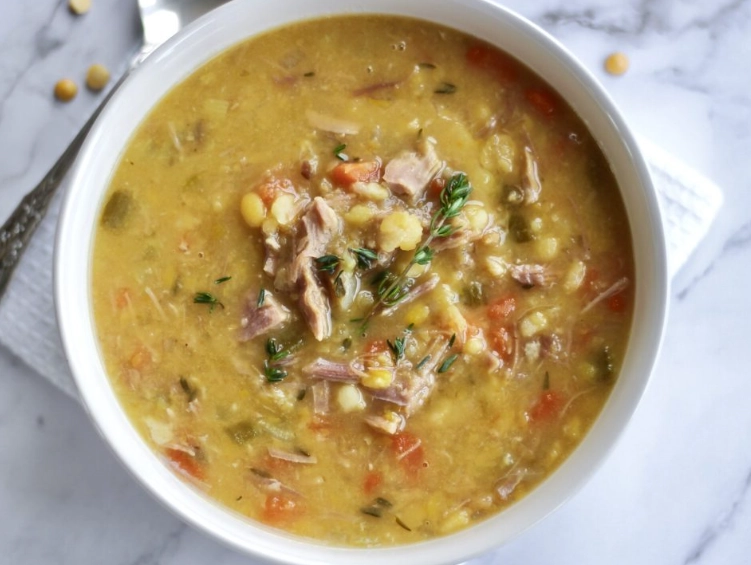
- Weigh and Log Every Ingredient Raw: This is the crucial step. Use a kitchen scale. Weigh your dried peas, your chunk of ham (bone-in or not), your carrots, everything. Use an app or the USDA FoodData Central database (a fantastic free resource) to find the calories for each raw weight.
- Add It All Up: This is your total calorie count for the entire pot. Let's say it comes to 2,800 calories.
- Weigh the Final Cooked Product: After your soup is done, weigh the whole pot (subtract the pot's weight). Let's say your giant pot of soup weighs 2,000 grams total.
- Do the Division: Total Pot Calories (2,800) ÷ Total Pot Weight (2,000g) = 1.4 calories per gram.
- Weigh Your Bowl: Ladle out your soup and weigh your bowl. If your bowl weighs 400 grams, then 400g x 1.4 cal/g = 560 calories for that bowl.
Pro-Tip: Yes, weighing the whole pot seems like a lot. But you only have to do it once per recipe. Once you know the calories per gram, you can just weigh your portion forever. It's liberating.
I know, I know. "Who has time for this?" I get it. I don't do it every single time. But doing it once for your go-to recipe takes the guesswork out forever. You'll know exactly what you're getting when you search for the calories in your ham and split pea soup.
Making a Lighter, Lower-Calorie Version That Doesn't Taste Like Sadness
You want to reduce the calories in ham and split pea soup? Great. But let's not make bland soup. Flavor is non-negotiable.
Here’s my strategy, born from some frankly disappointing "diet" soups I've made in the past:
- Choose Lean Ham: Start with a smoked turkey leg or a couple of slices of center-cut ham steak. You get the smoky, savory flavor without the pool of pork fat. It's my number one swap.
- Embrace Vegetable Power: Dice up extra carrots, celery, and onions. Add a chopped parsnip or turnip for sweetness. These add bulk, fiber, and nutrients for very few calories. They make the soup feel substantial.
- Boost the Herbs and Spices: This is key. Don't be shy with black pepper, a bay leaf, thyme, and a touch of smoked paprika (to make up for less smoky ham). A splash of cider vinegar or lemon juice at the end brightens everything up and makes flavors pop, so you don't miss the fat.
- Thicken Smartly: Instead of cream or a butter roux, take out a cup or two of the cooked soup (mostly peas and veggies), blend it until smooth, and stir it back in. It creates a naturally creamy, thick texture from the peas themselves.
- The Overnight Chill & Skim: If you do use a ham hock, this is mandatory. Chill, skim the fat, reheat. It's magic.
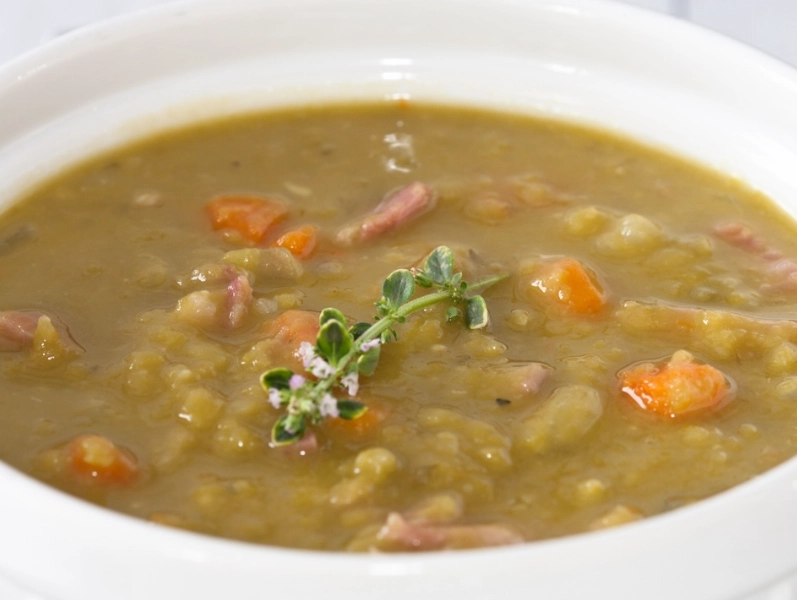
A Word of Warning: If you go too lean and skip all the flavor-building steps, you'll end up with a pot of mushy, bland peas. The goal is a satisfying, flavorful soup that happens to be lower in calories, not a punishment.
With these tricks, you can easily create a version that sits comfortably in that 200-250 calorie per cup range and still have people asking for the recipe.
Answering Your Burning Questions (The FAQ Bit)
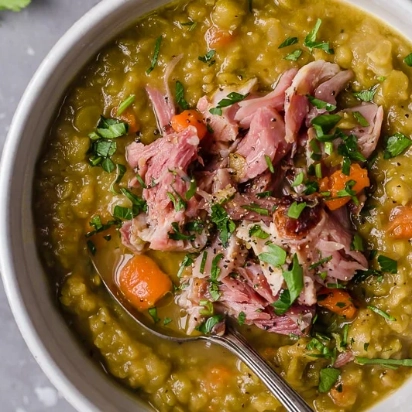
Beyond the Calories: The Nutritional Big Picture
We've been hyper-focused on calories, but let's zoom out for a second. A well-made ham and split pea soup is a nutritional powerhouse, which is why it's such a classic.
Even a higher-calorie version brings a lot to the table:
- Fiber Champion: Split peas are loaded with dietary fiber, great for digestion and blood sugar control.
- Plant-Based Protein: From the peas, plus animal protein from the ham. It's a complete protein meal.
- Vitamin and Mineral Boost: You're getting iron, potassium, B vitamins (especially from the peas and ham), and vitamin A from the carrots.
- Hydration: It's mostly water! That's a good thing.
So when you're evaluating that bowl, think about what you're getting for those calories. A 300-calorie bowl of this soup is far more nutritious and filling than a 300-calorie bag of chips or a sugary snack bar. It's about nutrient density. The MyPlate guidelines from the USDA emphasize meals just like this—ones that combine vegetables, protein, and legumes.
Sometimes I have to remind myself of this. It's easy to get obsessed with the number and forget the quality.
The Final Ladle
So, what's the final answer to "calories in ham and split pea soup"?
It depends. It depends on your ham, your peas, your pot, and your ladle. But now you know *why* it depends. You're not searching for a single, misleading figure anymore; you understand the recipe behind the number.
The goal isn't to scare you away from a comforting bowl of soup. It's the opposite—to give you the knowledge to enjoy it without the mystery. You can make an informed choice at a restaurant. You can tweak your family recipe. You can meal-prep a big, healthy pot on Sunday and know exactly what you're eating all week.
Start with the table ranges as your guide. If you want precision, try the weighing method just once. And if you want a lighter bowl, use those flavor-saving swaps. Don't be afraid of the soup. Just be smart about what goes in it. Now go make a pot. You've got this.
Reader Comments