The turkey is roasting, the potatoes are boiling, and a wave of panic hits. You just remembered the gravy. And you don't have any drippings. Maybe you're only roasting a breast. Maybe you're cooking the sides a day early. Or maybe your bird just didn't render much juice. Whatever the reason, I've been there. Staring into a nearly dry roasting pan on Thanksgiving morning is a special kind of kitchen dread. But here's the truth you need to hear right now: gravy without drippings isn't a compromise. It's an opportunity. You can make a deeply savory, velvety smooth turkey gravy that might just be better than the traditional kind, because you're in complete control of the flavor. Let's get rid of the drippings dependency for good.
Your Quick Guide to Perfect Gravy
- Why No Drippings Doesn't Mean No Flavor
- Your Flavor Arsenal: Pantry Heroes for Richness
- The Foolproof Step-by-Step Recipe
- The Thickening Agent Showdown: Roux vs. Cornstarch vs. Potato
- Expert Fixes & Flavor Tweaks
- The Ultimate Stress-Saver: Making Gravy Ahead of Time
- Your No-Drippings Gravy Questions, Answered
Why No Drippings Doesn't Mean No Flavor
We think drippings are magic. They're not. They're just concentrated meat juices, fat, and browned bits (the fond). The goal of a no-drippings gravy is to replicate that savory, umami-packed base using other means. The advantage? Drippings can be unpredictable—sometimes too fatty, sometimes too salty, sometimes barely there. Starting from scratch lets you build a balanced, robust flavor profile intentionally. The core principle is simple: fat + flour + liquid + flavor builders = gravy. The "liquid" part is where we get creative beyond the roasting pan.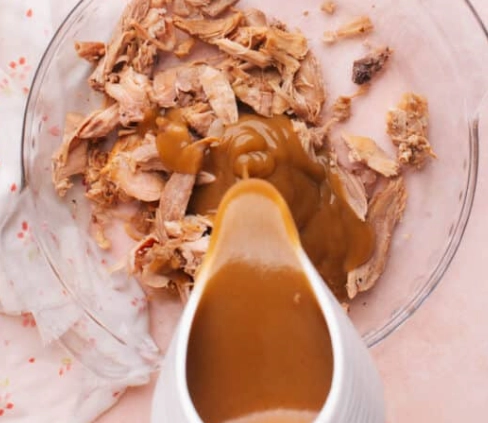
Your Flavor Arsenal: Pantry Heroes for Richness
Forget the idea that you need a whole turkey's worth of juice. These are the ingredients that will form the soul of your gravy. Keep them on hand, and you're never more than 15 minutes from greatness.
- Broth is King: Use a high-quality, low-sodium chicken or turkey broth. I prefer the ones in cardboard cartons over cans for flavor. If you have time, simmer some turkey wings or necks with vegetables to make your own, but a good store-bought broth works perfectly.
- The Umami Bomb Brigade: This is the secret weapon shelf. A teaspoon of soy sauce (won't make it taste Asian, I promise), a dash of Worcestershire sauce, a tablespoon of tomato paste, or even a half teaspoon of Marmite. These add the deep, meaty savoriness drippings provide.
- Aromatic Vegetables: A finely chopped onion, a minced garlic clove, or some sliced mushrooms sautéed in your butter or oil will add incredible foundational flavor.
- Herbs: A sprig of fresh thyme or rosemary, or a quarter teaspoon of dried sage, adds that classic holiday note.
The Foolproof Step-by-Step Recipe
This is my go-to method, developed after one too many years of last-minute gravy anxiety. It makes about 3 cups, enough for a generous serving for 6-8 people.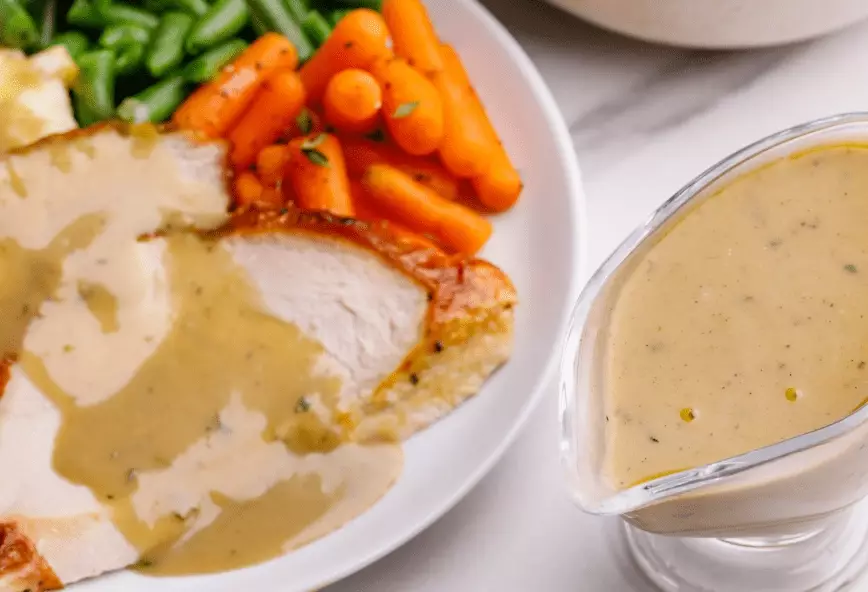
What You'll Need
- 4 tablespoons unsalted butter (or turkey/chicken fat if you have some saved)
- 1 small yellow onion, finely chopped (about 1/2 cup)
- 1/4 cup all-purpose flour
- 4 cups low-sodium chicken or turkey broth, warmed
- 1 tablespoon soy sauce (or Worcestershire sauce)
- 1 teaspoon tomato paste
- 1 sprig fresh thyme (or 1/4 tsp dried)
- Salt and freshly ground black pepper to taste
The Process
- Build the Base: Melt the butter in a medium saucepan over medium heat. Add the chopped onion and cook, stirring occasionally, until soft and translucent, about 5-7 minutes. You're not looking for color here, just sweetness.
- Make the Roux: Sprinkle the flour over the onions and butter. Whisk constantly and cook for 2-3 minutes. This cooks out the raw flour taste and turns the mixture a light blonde color. This is your thickening power.
- Deglaze and Simmer: While whisking vigorously, slowly pour in the warm broth. Add the soy sauce, tomato paste, and thyme sprig. Bring to a simmer, then reduce heat to low.
- Cook and Thicken: Let it simmer gently for 10-15 minutes, stirring occasionally. It will thicken to a gravy-like consistency. The longer it simmers, the more the flavors meld.
- Season: Remove the thyme sprig. Season with salt (be careful, the soy sauce added salt) and a generous amount of black pepper. Taste. Does it need more depth? A tiny splash of cider vinegar can brighten it. More umami? Another dash of Worcestershire. Adjust until it sings.
- Strain (Optional but Recommended): For the silkiest gravy, pour it through a fine-mesh sieve into a serving jug or bowl, pressing on the onions to get all the goodness. This removes any tiny lumps and the onion bits, giving you a perfectly smooth sauce. I always do this.
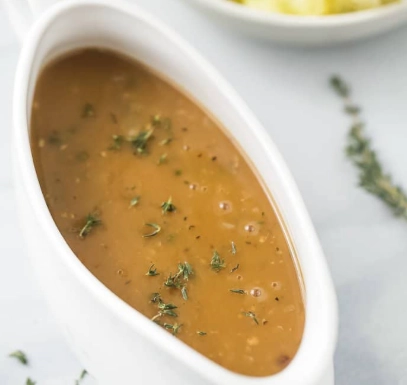
The Thickening Agent Showdown: Roux vs. Cornstarch vs. Potato
This is where most gravy anxiety lives. Will it be lumpy? Too thin? Too gloppy? Here’s a clear breakdown of your options.
| Method | How It Works | Best For | Watch Out For |
|---|---|---|---|
| Roux (Butter + Flour) | Fat and flour cooked together, then liquid is added. Thickens as it simmers. | The classic, most reliable method. Adds a subtle nutty flavor and gives gravy a velvety, opaque body. Perfect for making ahead. | Must cook the raw flour taste out for 2-3 min. Add warm liquid slowly while whisking to prevent lumps. |
| Cornstarch Slurry | Cornstarch mixed with cold water, then stirred into simmering liquid. | A quick fix or for gluten-free gravy. Creates a glossy, clear thickening. Works fast. | Can create a slightly "gluey" texture if overused. Gravy can thin out if reheated or overcooked. Always mix with cold water first. |
| Puréed Vegetables | Cooked potato, cauliflower, or even cooked onion from the gravy itself, blended smooth. | A rustic, wholesome thickener that adds flavor and nutrients. Naturally gluten-free. | Can make gravy starchy or alter flavor. Best for rustic, herb-forward gravies. May not be as silky-smooth. |
My unwavering recommendation? The roux. It's forgiving, stable, and contributes to the flavor. The slurry is a great plan B if your gravy is too thin at the last minute.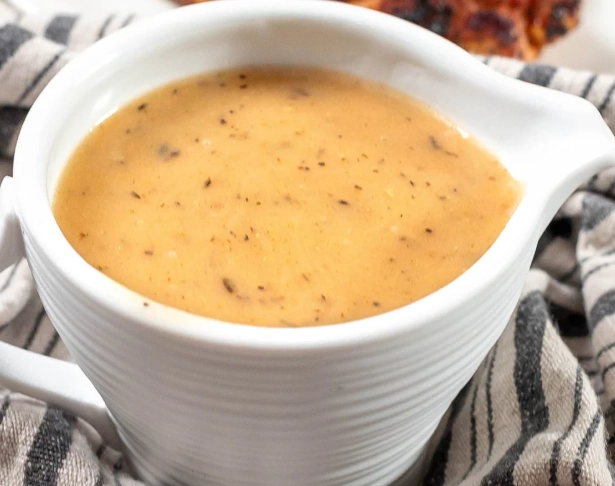
Expert Fixes & Flavor Tweaks
Gravy rarely comes out perfect on the first try, and that's okay. Here’s how to course-correct like a pro.
Too Thin? Simmer it longer to reduce. If time is short, make a cornstarch slurry (1 tbsp cornstarch + 1 tbsp cold water) and whisk it in. Let it bubble for a minute to thicken.
Too Thick? Easy. Whisk in more warm broth, a splash at a time, until it's just right.
Tastes Bland? You're likely missing salt, acidity, or umami. Add a pinch of salt. Try a squeeze of lemon juice or a tiny splash of vinegar. A bit more soy sauce or a dash of fish sauce (trust me) can work wonders.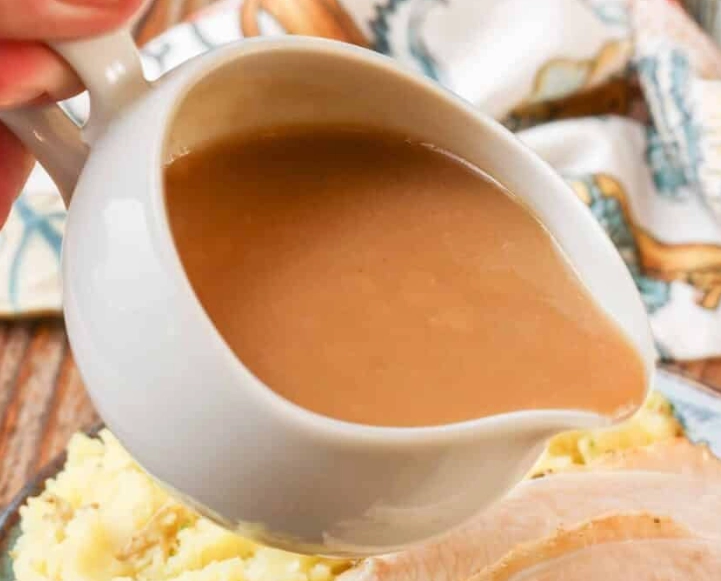
Tastes Floury? You didn't cook the roux long enough. Simmer the gravy for another 5-10 minutes; that raw taste will cook out.
The Ultimate Stress-Saver: Making Gravy Ahead of Time
This is the single best piece of advice I can give you for a calm Thanksgiving. Make your gravy 2-3 days before. Let it cool, store it in the fridge, and forget about it. On the big day, just reheat it gently in a saucepan. It will have thickened in the fridge—that's normal. Add a little water or broth as you reheat it to get back to the perfect consistency. The flavor only gets better as it sits.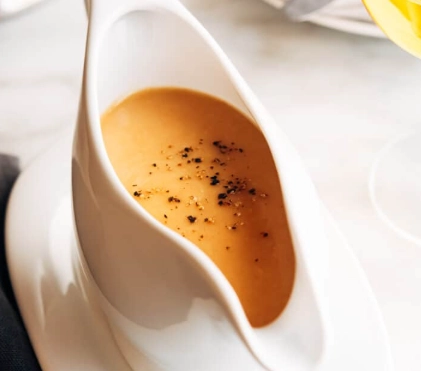
Your No-Drippings Gravy Questions, Answered
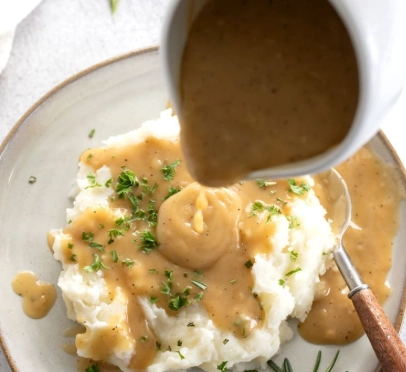
So, the next time you find yourself without drippings, don't panic. See it as a chance to make a gravy that's uniquely yours—balanced, flavorful, and completely under your control. With a few pantry staples and these techniques, you'll never depend on a roasting pan again. Now, go enjoy your holiday meal. The gravy's covered.
Reader Comments