Quick Guide
- Why the Calorie Count for a Banana Nut Muffin is All Over the Map
- What's Inside? Breaking Down the Banana Nut Muffin Nutrition Profile
- How to Actually Make a Lower-Calorie Banana Nut Muffin (That Still Tastes Good)
- Your Action Plan: Navigating the World of Banana Nut Muffins
- Common Questions About Banana Nut Muffin Calories (Answered)
- The Bottom Line on Your Muffin Habit
Okay, let's be honest. You're here because you love a good banana nut muffin. That moist crumb, the sweet banana punch, the crunchy walnut bits... it's comfort food in a paper liner. But then that little voice in your head chimes in: “Just how bad is this for me?” You type “banana nut muffin calories” into Google, bracing for the worst.
I've been there. Staring at the bakery case, trying to decide if my afternoon treat is going to derail my whole day. The problem is, the answer you get is almost useless. “About 350 to 500 calories,” says one site. Great. That's a huge range. Is mine at the low end or the high end? What makes the difference?
That's what we're going to unpack. This isn't about slapping a scary number on your favorite snack to make you avoid it. It's about understanding what's in it, so you can make informed choices—whether you're buying one or baking a batch at home. Because knowledge, as they say, is power. And in this case, it might just be the power to still enjoy your muffin.
The Quick Answer (But Stick Around for the Good Stuff): A standard, bakery-style banana nut muffin can pack anywhere from350 to 500 calories. A smaller, “homestyle” one might be closer to 300. But that calorie count is just the headline. The real story is in the fat, sugar, and portion size.
Why the Calorie Count for a Banana Nut Muffin is All Over the Map
Think about it. The banana nut muffin you grab from a coffee chain is a different beast from the one your grandma makes, which is different from the “healthy” version you buy from a gourmet market. The variation in banana nut muffin nutrition is massive, and it boils down to a few key factors.
Size Matters (A Lot). This is the biggest culprit. The “muffin top” isn't just a joke; it's a real phenomenon of portion inflation. A classic muffin from a decades-old cookbook was meant to be a modest breakfast item. Today, some bakery muffins are the size of a small cake. We're talking 5 or 6 ounces of muffin versus a modest 3-ounce portion. That alone can double the calorie load before we even look at the ingredients.
The Sugar and Fat Show. The base ingredients are fairly simple: flour, banana, eggs, fat, sugar, nuts. But the type and amount of fat and sugar are where recipes diverge wildly. Some use oil, some use melted butter. Some rely on the natural sweetness of very ripe bananas, while others add a full cup of granulated sugar plus a streusel topping. Nuts add healthy fats and protein, but they're also calorie-dense.
Let me give you a personal example. I once tried a “decadent” banana nut muffin recipe from a popular food blog. It was delicious—incredibly moist and rich. But when I plugged the ingredients into a calculator, I nearly fell over. Each muffin was pushing 600 calories! The recipe used a full cup of sugar, a whole stick of butter, and sour cream. It was basically a cupcake without frosting. That experience made me realize how deceptive “banana nut muffin calories” can be.
So, to make sense of this, let's look at some concrete numbers. The USDA FoodData Central is my go-to for unbiased nutritional baselines. While they don't have an entry for every specific muffin, their data on individual ingredients and standard baked goods gives us a solid foundation.
Banana Nut Muffin Calories: A Side-by-Side Comparison
This table breaks down the estimated nutrition for different types of muffins. Remember, these are averages and estimates based on common recipes and product labeling.
| Muffin Type & Size | Approx. Calories | Total Fat | Sugars | Key Characteristics |
|---|---|---|---|---|
| Large Bakery/Grocery Muffin (5-6 oz) | 450 - 550 | 20-30g | 35-50g | Often the highest in sugar/fat; may have sugary crumb topping. |
| Standard Homemade Muffin (3.5-4 oz) | 350 - 420 | 15-22g | 25-35g | Follows a classic recipe with oil/butter and moderate sugar. |
| “Coffee Shop” Medium Muffin (~4 oz) | 380 - 450 | 16-25g | 30-40g | Consistent size, often made from commercial mixes; reliably sweet. |
| “Healthy” or Reduced-Fat Version (3-4 oz) | 280 - 350 | 8-12g | 20-28g | May use applesauce/yogurt, less sugar, whole wheat flour. |
| Mini Banana Nut Muffin (1-1.5 oz) | 100 - 150 | 4-8g | 8-15g | Perfect for portion control; calorie count adds up if you eat several. |
See what I mean? Calling it just “a muffin” tells you almost nothing. That “healthy” label on the package might shave off 100 calories, or it might just be clever marketing. Checking the nutrition facts panel on the back is your only real defense.
What's Inside? Breaking Down the Banana Nut Muffin Nutrition Profile
Calories are just energy. What fuels that energy matters more for your health and how full you feel. So let's dissect a typical 400-calorie homemade banana nut muffin.
Carbohydrates (The Main Player): Usually around 50-60 grams. This comes from the flour (white or whole wheat) and, of course, the sugar. The bananas contribute natural sugars and fiber. Speaking of fiber, a good muffin with whole wheat flour and nuts might offer 3-4 grams, which helps slow down sugar absorption. A refined white flour muffin might have barely 1 gram.
Fats (The Flavor Carrier): Typically 15-25 grams. This is where the nuts (walnuts are classic) and the baking fat (oil or butter) live. Nuts provide mostly unsaturated fats, which are heart-healthy. Butter or oil adds saturated fat. The ratio depends on the recipe.
Protein (The Underdog): Often only 5-7 grams, coming from the eggs, nuts, and a bit from flour. This is one area where banana nut muffins don't shine. The low protein content is why a muffin might not keep you full for long, despite its calorie heft.
The Sugar Trap: This is the part that worries me most. It's not uncommon for a large commercial muffin to contain more than 40 grams of sugar. To put that in perspective, the American Heart Association recommends no more than 25-36 grams of added sugar per day for most adults. One muffin can blow past that entire daily limit. Even if you're just tracking banana nut muffin calories, the sugar content is what can lead to an energy crash later.
So, are banana nut muffins healthy? Not really, in their traditional form. They're a baked treat, a dessert-for-breakfast item. But that doesn't mean they can't be part of a balanced diet. It's all about context and frequency.
How to Actually Make a Lower-Calorie Banana Nut Muffin (That Still Tastes Good)
This is where we get practical. If you bake at home, you have total control. You can significantly alter the banana nut muffin calories and nutrition. I've experimented with a ton of “healthy” swaps, and some are winners while others are… well, let's just say my family politely avoided them.
Here’s what actually works, based on both my own fails and research from trusted sources like The Nutrition Source by Harvard T.H. Chan School of Public Health, which emphasizes using whole foods and healthy fats.
Smart Ingredient Swaps to Slash Calories & Boost Nutrition
- Swap Half the Oil/Butter for Unsweetened Applesauce or Greek Yogurt. This is the #1 trick. It keeps the muffin incredibly moist while cutting fat and calories. Start by replacing half the fat. I wouldn't replace all of it—you still need some fat for texture and flavor.
- Use Whole Wheat Pastry Flour or White Whole Wheat Flour. It adds fiber, nutrients, and a nutty flavor that pairs perfectly with bananas and nuts. All-purpose flour is basically empty carbs.
- Rely on Super-Ripe Bananas. The blacker, the better. They are naturally sweeter, so you can reduce the added sugar by 25-30%. Sometimes I use 3 bananas instead of 2 and cut the sugar in half.
- Choose a Natural Sweetener. Instead of all white sugar, try using pure maple syrup or honey. You use less volume for the same sweetness, and they contain trace minerals. (Note: they are still sugars, so moderation applies).
- Boost the Protein. Add a scoop of unflavored protein powder or use a higher-protein flour like almond flour for part of the mix. This helps with satiety big time.
- Mind Your Nuts. Toast them first for maximum flavor, then chop them finely. You'll get nutty flavor in every bite without needing huge chunks, allowing you to use a bit less overall.
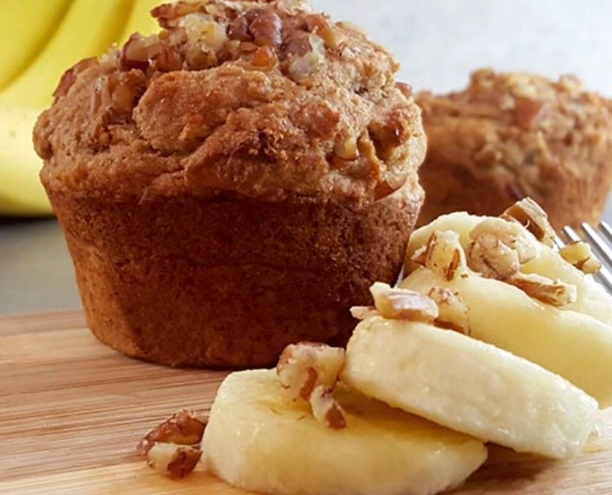
A muffin made with these swaps might have a banana nut muffin calorie count closer to 250-300, with more fiber, more protein, and less added sugar. It becomes a genuinely satisfying snack, not just a sugar bomb.
Your Action Plan: Navigating the World of Banana Nut Muffins
Whether you're at the store, a cafe, or in your own kitchen, here’s your cheat sheet.
When Buying:
- Look at the Size. If it's as big as your fist, consider sharing it or saving half for later.
- Read the Label. Don't just look at calories. Scan the sugar line. Anything over 20g of added sugar per serving is a red flag for a regular snack.
- Check for Whole Grains. “Whole wheat flour” should be the first ingredient, not “enriched wheat flour.”
When Baking:
- Use a Muffin Scoop. It ensures even, portion-controlled muffins. You'll get 12 reasonable muffins from a standard recipe, not 9 giant ones.
- Embrace the Swaps. Try the applesauce trick. You won't regret it.
- Skip the Streusel. That buttery, sugary topping can add 100+ extra calories per muffin. A sprinkle of oats or a few extra nut pieces on top adds crunch without the guilt.
When Eating:
- Pair it with Protein. Have your muffin with a hard-boiled egg, a slice of cheese, or a glass of milk. This balances the blood sugar spike and keeps you full longer.
- Make it a Snack, Not a Side. If you have a muffin with your latte, maybe skip the other carb-heavy side you were thinking about.
- Savor It. Eat it slowly, without distraction. You'll enjoy it more and be more in tune with when you're satisfied.
Common Questions About Banana Nut Muffin Calories (Answered)
The Bottom Line on Your Muffin Habit
So, what's the final word on banana nut muffin calories? It's complicated, but now you have the tools to navigate it.
The average banana nut muffin is a high-calorie, high-sugar treat. It's not something to eat every day if you're watching your weight or sugar intake. But demonizing it isn't helpful either. Food is also about joy and tradition.
The most empowering approach is to take control. Bake your own. Use those simple swaps. Make them a reasonable size. When you buy one, be a savvy consumer and read the label. And when you do eat one, really enjoy it. Pair it with something nutritious, eat it mindfully, and move on with your day.
Understanding the true story behind banana nut muffin nutrition facts allows you to fit them into your life without fear or guilt. You can have your muffin and eat it too—you just might choose to make it a slightly different, smarter muffin.
Now, if you'll excuse me, I have some very ripe bananas on my counter begging to be turned into a better batch of muffins. This time, I'm reaching for the applesauce.
Reader Comments