Quick Navigation
- Why Do We Care About Calories in a Muffin?
- Breaking Down the Calories: Where Do They Come From?
- Calorie Showdown: Classic vs. "Healthy" vs. Truly Health-Conscious
- How to Actually Bake a Lower-Calorie Banana Nut Muffin That Doesn't Suck
- Your Burning Questions About Banana Nut Muffin Calories, Answered
- Beyond Calories: The Full Nutritional Picture
- Final Thoughts: Making Peace with Your Muffin
Let's talk about something we all love but sometimes feel a little guilty about: banana nut muffins. You know the ones. They smell amazing, they're moist, they have those little crunchy bits of walnut... and then the question pops into your head. Just how many calories are in this thing? Is my "healthy" banana nut muffin actually healthy, or is it a cupcake in disguise?
I've been there. I used to bake a batch every Sunday, telling myself they were a good breakfast option. Then I actually sat down and calculated what was going into them. Let's just say I was surprised. The sugar! The oil! It was a wake-up call. That's why I dove deep into the world of healthy banana nut muffin calories, nutrition, and recipe tweaks. I wanted the comfort food without the dietary regret.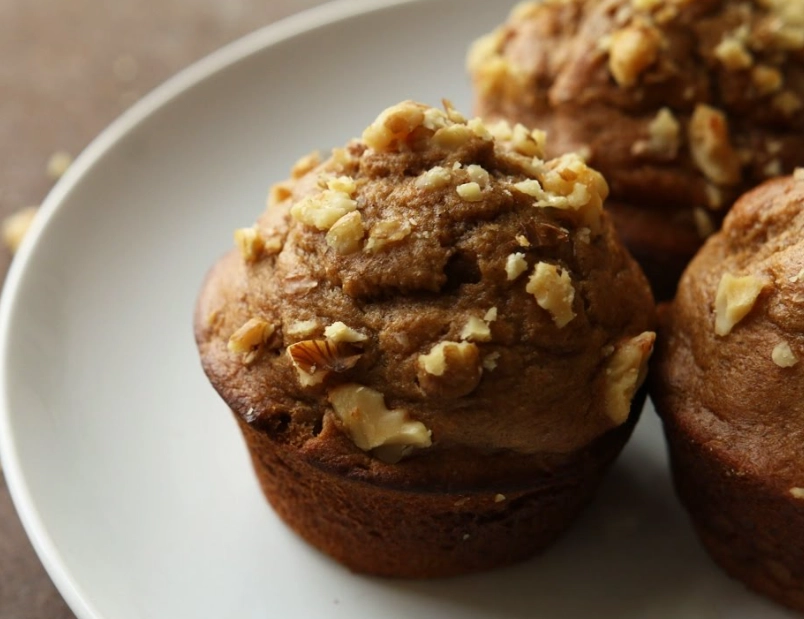
This guide isn't about putting your favorite treat on a naughty list. It's about understanding what's in it, so you can make informed choices—whether you're buying them or, even better, baking them yourself. We'll strip away the marketing fluff and look at the real numbers, compare different approaches, and I'll share the tricks I've learned to make a muffin that's genuinely satisfying and better for you.
Why Do We Care About Calories in a Muffin?
It's a fair question. Not everyone is counting every single calorie, and that's perfectly fine. But for many of us, having a rough idea matters. Maybe you're trying to manage your weight. Maybe you're just curious about what you're putting in your body. Or perhaps you're looking for a snack that will give you steady energy, not a sugar crash an hour later.
Understanding the calories in a healthy banana nut muffin is the first step to understanding its overall nutritional profile. Calories tell us about energy, but the source of those calories tells us about quality. A 300-calorie muffin packed with refined flour and sugar acts very differently in your body than a 300-calorie muffin made with whole grains, natural sweetness from fruit, and healthy fats from nuts.
So, let's get those facts.
Breaking Down the Calories: Where Do They Come From?
To really grasp healthy banana nut muffin calories, you need to dissect the recipe. Every ingredient contributes. Let's look at the usual suspects.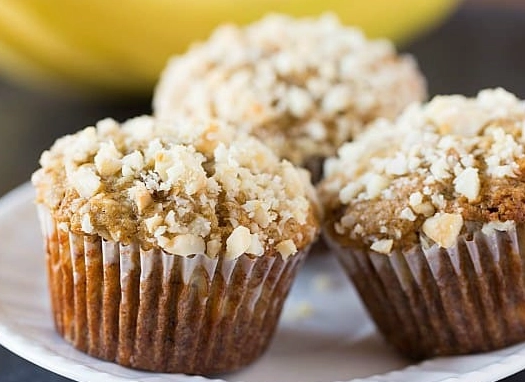
The Main Players
Bananas: This is the star, right? A medium banana adds about 105 calories, but it's also bringing potassium, fiber, and natural sweetness. This is where the "healthy" part often starts. The riper the banana, the sweeter it is, which means you can potentially use less added sugar.
Nuts (Usually Walnuts): A quarter-cup of chopped walnuts is roughly 190 calories. Yes, that's a lot. But it's also a source of omega-3 fatty acids, protein, and more fiber. These are nutrient-dense calories that help you feel full. You can't just ignore them in the count, but their nutritional value is high.
Flour: This is a big one. One cup of all-purpose white flour has around 455 calories and offers little in terms of fiber or nutrients. Swapping even half of it for whole wheat flour changes the game—similar calories, but more fiber and a lower glycemic impact.
Sugar: Granulated white sugar packs about 770 calories per cup. It's pure, empty calories. Many recipes call for 3/4 to 1 cup of sugar on top of the bananas. This is often the primary driver of high calorie counts in banana nut muffins.
Oil/Butter: Fat is necessary for moisture and texture. Half a cup of vegetable oil is about 960 calories. It's easy to see how the numbers add up quickly.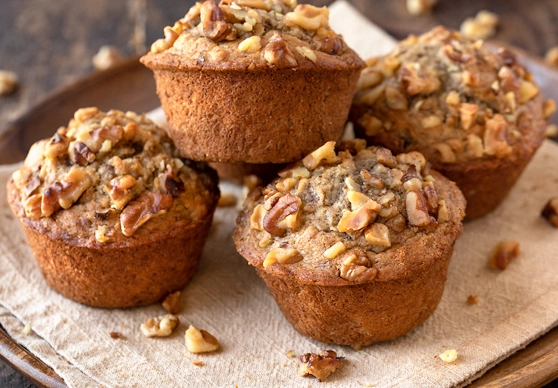
Calorie Showdown: Classic vs. "Healthy" vs. Truly Health-Conscious
Let's put this into perspective with a table. We'll compare three theoretical muffins, each a standard bakery-size (think large, not mini). The numbers are estimates based on common recipes and nutrition calculators, but they illustrate the point perfectly.
| Muffin Type | Estimated Calories | Key Ingredients Profile | The Taste & Texture Truth |
|---|---|---|---|
| The Classic Coffee Shop Muffin | 450 - 580 | White flour, 3/4 cup+ sugar, 1/2 cup oil, banana, nuts. | Very sweet, moist, often dense. The top is usually sugary. Delicious, but more like dessert. |
| The Standard "Healthy" Recipe | 320 - 400 | Mix of white/whole wheat flour, 1/2 cup sugar, 1/3 cup oil, banana, nuts. | Still quite sweet and satisfying. Most people would call this a good compromise. This is where many online "healthy" recipes land. |
| The Truly Health-Conscious Muffin | 220 - 300 | Mostly whole wheat/oats, 1/4 cup sweetener (honey/maple), 3 tbsp oil/applesauce, extra banana, nuts. | Less sweet, more earthy/nutty flavor. Denser texture but still moist. You taste the banana and nuts more. |
Looking at that, the range for what's called a healthy banana nut muffin is huge—anywhere from 220 to 400 calories! That's why the label "healthy" is almost useless on its own. You have to peek at the recipe.
My personal goal is to land in that bottom row. A muffin around 250-280 calories that's made with real ingredients and keeps me full until lunch? That's a win.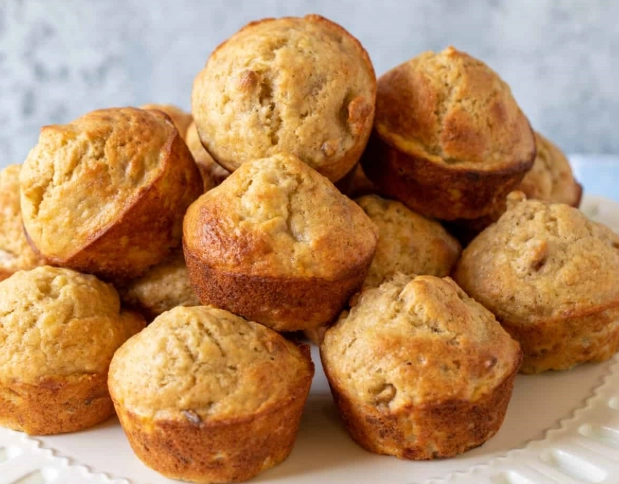
How to Actually Bake a Lower-Calorie Banana Nut Muffin That Doesn't Suck
Let's be real. No one wants a dry, flavorless muffin. The trick is smart substitution, not just taking things away. Here's what I've found works after a lot of trial and (sometimes) error.
Smart Swaps for Core Ingredients
- Flour: Start by replacing 50-75% of all-purpose flour with whole wheat pastry flour or old-fashioned oats blitzed into a flour. It adds fiber and nutrients without making the muffin taste like a brick. I don't go 100% whole wheat—the texture gets a bit heavy for my taste.
- Sugar: This is the biggest lever. First, use very ripe bananas—the blacker the spots, the better. They are much sweeter. Then, cut the added sugar in your go-to recipe by one-third. You won't miss it. For the remaining sugar, consider using pure maple syrup or honey. They're still sugars, but they contain trace minerals and can add moisture. I find I can use slightly less volume of these compared to white sugar for the same perceived sweetness.
- Fat: You need some fat. But instead of 1/2 cup of oil, try 1/4 cup oil plus 1/4 cup unsweetened applesauce or plain Greek yogurt. The applesauce/yogurt adds moisture and structure for far fewer calories. The oil that remains ensures it doesn't taste "fat-free." I like using avocado oil for its neutral flavor.
- Nuts: Keep them! Don't skimp here for the sake of healthy banana nut muffin calories. Their fat, protein, and crunch are essential. Just measure them—a 1/4 cup scattered through the batter is plenty.
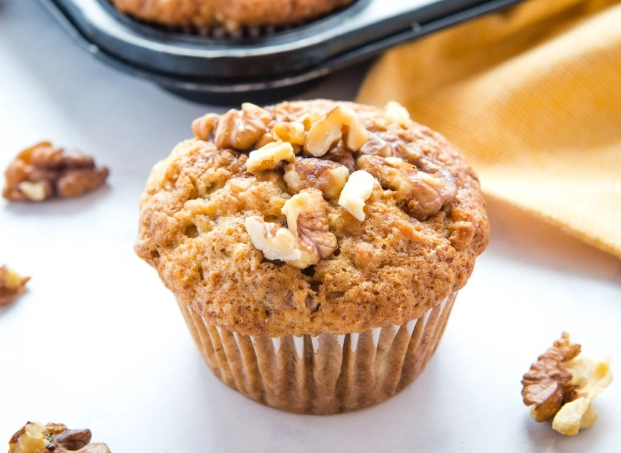
A Sample Recipe Framework (Not a full recipe, but a blueprint)
Want to see how this comes together? Here's the skeleton of my current favorite batch. It makes 12 standard muffins, each coming in at an estimated 260-280 calories.
- 3 very ripe, large bananas (mashed well)
- 2 large eggs
- 1/4 cup avocado oil or melted coconut oil
- 1/4 cup plain Greek yogurt
- 1/3 cup pure maple syrup
- 1 tsp vanilla extract
- 1 cup whole wheat pastry flour
- 3/4 cup old-fashioned oats
- 1 tsp baking soda, 1/2 tsp salt, 1 tsp cinnamon
- 3/4 cup chopped walnuts
Mix wet, mix dry, combine gently, fold in nuts, bake at 350°F (175°C) for 18-22 minutes. That's it. The oats give it a hearty feel, the yogurt makes it tender, and the maple syrup pairs beautifully with the walnuts.
Your Burning Questions About Banana Nut Muffin Calories, Answered
I get asked a lot of specific questions. Here are the most common ones, based on what people search and what my friends ask me.
Beyond Calories: The Full Nutritional Picture
Getting fixated only on healthy banana nut muffin calories is like judging a book by its word count. What matters is the story inside. Let's look at the other nutrients a well-made muffin provides.
- Fiber: This is the hero. From whole wheat flour, oats, bananas, and nuts, a good muffin can offer 3-5 grams of fiber. That helps with digestion, blood sugar control, and keeping you full. A low-fiber muffin with the same calories will leave you hungry sooner.
- Protein: Eggs, nuts, Greek yogurt, and even the whole grains contribute. A muffin with 5-7 grams of protein is a much more substantial snack than one with 2-3 grams.
- Healthy Fats: Those walnuts (and any oil you use) provide monounsaturated and polyunsaturated fats, which are good for heart health.
- Micronutrients: Bananas bring potassium and vitamin B6. Walnuts have magnesium and antioxidants. Whole grains offer B vitamins and iron.
When you look at it this way, a 280-calorie muffin packed with these nutrients is a completely different food product than a 280-calorie bag of chips or a candy bar. The calories are the same, but the nutritional impact on your body is worlds apart.
Final Thoughts: Making Peace with Your Muffin
Here's the bottom line, from one muffin lover to another. You don't have to give up banana nut muffins. You just have to get smarter about them.
If you're buying them, be skeptical of the "healthy" label. Look for ones with visible grains, not a sugary top, and ask about ingredients if you can. Better yet, bake your own. It's simpler than you think, and you have total control. You get to decide the balance between indulgence and nourishment.
Focus on upgrading the ingredients—more whole food, less refined stuff. When you do that, the healthy banana nut muffin calories tend to take care of themselves, landing in a reasonable range. And you get a treat that actually makes you feel good, not just while you're eating it, but afterwards too.
I still enjoy a decadent bakery muffin once in a blue moon. But for my everyday life, the version I make at home—the one I know has real food in it and sits around 270 calories—is the one that truly feels like a healthy choice. And it still satisfies that cozy, comforting muffin craving perfectly.
Happy baking!
Reader Comments