You just ordered a Caesar salad, thinking it's the healthy choice. Then it arrives, drenched in that creamy, garlicky, parmesan-packed dressing. It tastes amazing. But a little voice in your head asks: how many calories are actually in this Caesar dressing? If you've ever tried to look it up, you've seen numbers all over the place—from 80 to 180 calories for a two-tablespoon serving. What gives?
The truth is, there's no single answer. Asking about Caesar dressing calories is like asking how much a car costs. It depends entirely on the model. Is it a homemade classic? A restaurant's secret recipe? A bottled "light" version from the grocery store? The calorie count can double or even triple based on the recipe.
I learned this the hard way. Years ago, I was meticulously tracking my meals and assumed my homemade Caesar was a safe bet. I was using a "classic" recipe. When I finally plugged the ingredients into a calculator, I was stunned. My innocent-looking side salad had become a calorie bomb worthy of a cheat day. That moment changed how I view all dressings, especially this one.
What You'll Learn In This Guide
Why Calorie Counts Vary Wildly
Let's cut to the chase. The massive range in Caesar dressing calories comes down to one ingredient: oil. Authentic Caesar dressing is an emulsion—a stable mixture of oil and water-based ingredients (like lemon juice and egg yolk). To get that creamy, clinging texture, you need a lot of oil.
A standard classic recipe might call for:
- 1/2 to 3/4 cup of olive oil (that's 8 to 12 tablespoons)
- 2-3 egg yolks
- 1/4 to 1/2 cup of grated Parmesan cheese
- 2-3 cloves of garlic
- Anchovy paste or filets
- Lemon juice, mustard, Worcestershire sauce
Do the math. One tablespoon of olive oil has about 120 calories. If a recipe uses 1/2 cup (8 tbsp), that's 960 calories from oil alone, before adding the cheese and egg yolks. Divide that batch into ten 2-tbsp servings, and each serving gets nearly 100 calories just from its share of the oil. Add the cheese and yolks, and you're easily at 150-180 calories per serving.
The Big Misconception: People often blame the cream, but traditional Caesar dressing doesn't contain any. The creaminess comes purely from the emulsion of oil and egg yolk. The high calories are a feature, not a bug—it's designed to be a rich, flavorful coating.
Now, compare that to a store-bought "light" version. To cut calories, manufacturers replace most of that oil with water, buttermilk, yogurt, or starches as thickeners. The flavor profile changes, and the calories can drop to 45-80 per serving. That's why you see such a wide range online. You're not comparing apples to apples; you're comparing olive oil to yogurt.
Calorie Breakdown: Traditional vs. Restaurant vs. Store-Bought
To make sense of it all, here’s a concrete comparison. These numbers are estimates based on common recipes and nutrition labels, but they paint a clear picture. Remember, a "serving" is typically 2 tablespoons (30ml), which is often less than what gets tossed on a restaurant salad.
| Type of Caesar Dressing | Calories (per 2 tbsp) | Fat (grams) | Key Ingredients / Notes |
|---|---|---|---|
| Homemade (Classic Recipe) | 150 - 180 | 16 - 20g | Olive oil, egg yolk, Parmesan, anchovy. The gold standard for flavor, highest in calories. |
| Casual Dining Restaurant (e.g., Olive Garden side serving) | 160 - 200 | 17 - 22g | Often includes mayonnaise for stability and extra creaminess, increasing fat. |
| Steakhouse / Upscale Restaurant | 180 - 250+ | 19 - 28g | Made tableside with lavish amounts of oil and cheese. Portions are generous. |
| Regular Store-Bought (e.g., Cardini's, Brianna's) | 140 - 170 | 14 - 18g | Uses oil as primary base, similar to homemade but may have preservatives. |
| "Light" Store-Bought (e.g., Ken's Lite, Newman's Own Light) | 70 - 100 | 6 - 9g | Reduced oil, often with water, modified food starch. |
| Yogurt-Based Store-Bought (e.g., Bolthouse Farms) | 45 - 60 | 2 - 4g | Uses nonfat yogurt as base. Lowest calorie, texture is thinner, tangier. |
See the pattern? The more the recipe relies on pure oil and cheese for its body, the higher the calorie count. The restaurant versions are tricky because they don't just control the recipe—they control the portion. That side cup of dressing they give you? It can hold 4-6 tablespoons, not 2. Suddenly your 160-calorie addition becomes a 400-500 calorie sauce.
Making a Lighter Caesar Dressing That Doesn't Suck
If you love Caesar salad but the calorie count stresses you out, making your own is the best move. You control everything. The goal isn't to make a zero-calorie sauce—that's impossible and tastes terrible. The goal is to make a flavor-forward dressing where you don't miss the excess oil.
After years of experimenting, here's my go-to method that saves about 60% of the calories compared to the classic:
The "Half-Oil, Half-Creamy Base" Method
Don't eliminate oil entirely. You need some for that authentic mouthfeel and to carry the fat-soluble flavors (like garlic). Instead, cut it in half and replace the other half with a protein-rich, creamy base.
- Base Option 1 (My Favorite): 1/4 cup plain 2% Greek yogurt + 1/4 cup olive oil.
- Base Option 2 (Extra Creamy): 1/4 cup blended low-fat cottage cheese + 1/4 cup olive oil.
To that base, add your flavor powerhouses: 1 minced garlic clove, 1 tbsp fresh lemon juice, 1 tsp Dijon mustard, 2 tbsp grated Parmesan, 1 tsp anchovy paste (don't skip this—it's the umami backbone), salt, and pepper. Whisk it all together. The yogurt or cottage cheese provides thickness and a protein boost, allowing you to use much less oil. The result is a dressing with about 70-80 calories per 2-tbsp serving that still feels indulgent.
A common mistake when making light dressings is overcompensating with sugar or salt. You don't need it. The Parmesan and anchovy bring enough savory depth.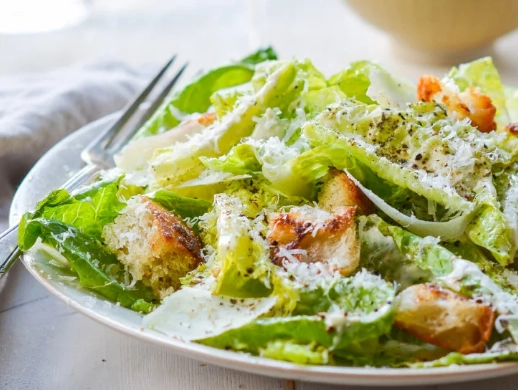
How to Order a Caesar Salad Without Regret
You're at a restaurant. You want the Caesar. What do you do? Here’s a field-tested strategy.
First, always ask for the dressing on the side. This is non-negotiable. When the salad arrives, use the fork-dip method: dip the tines of your fork into the dressing cup, then spear a bite of salad. You'll be shocked at how little dressing you need to get the flavor on each bite. You'll likely use half or even a third of what they provide.
Second, ask if they have a lighter version. Some places, especially healthier chains, might offer a yogurt-based or vinaigrette-style Caesar. It's worth asking.
Third, audit the whole plate. The dressing is only part of the equation. Is the salad topped with fried croutons or grilled chicken? Is it a mountain of romaine or a small handful? Adding a lean protein helps balance the meal and makes you need less dressing to feel satisfied.
I once ordered a Caesar salad at a nice Italian spot and followed this method. I used maybe a tablespoon and a half of the rich, delicious dressing they gave me on the side. I enjoyed every bite, didn't feel deprived, and avoided that heavy, over-dressed feeling that ruins the rest of your meal.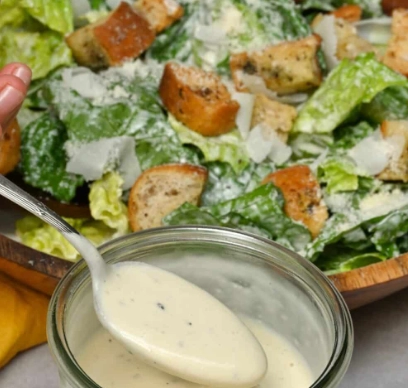
Your Burning Caesar Dressing Questions, Answered
So, how many calories are in Caesar dressing? It's a spectrum. It can be a 45-calorie accent or a 250-calorie sauce. The power is in knowing the difference. You don't have to give it up. You just need to know which version you're dealing with and adjust your strategy—whether that's making a smarter version at home or mastering the fork-dip technique at a restaurant. Enjoy your salad.
Reader Comments