Let's be honest. Winter squash plants are space hogs. A single butternut squash vine can sprawl over 15 square feet, turning your neat garden bed into a tangled jungle. I learned this the hard way my first season, watching pumpkins rot where they touched damp soil. That's when I switched to vertical growing. Building a trellis for winter squash isn't just a space-saver; it's a game-changer for plant health and harvest quality. It keeps fruits clean, improves air circulation to deter mildew, and makes pest inspection a breeze. This guide walks you through building a sturdy, DIY trellis that won't collapse under the weight of your harvest.
What's Inside This Guide
Why Go Vertical with Winter Squash?
Most gardeners think of peas and beans for trellises. Winter squash? Seems heavy. But the benefits are too significant to ignore.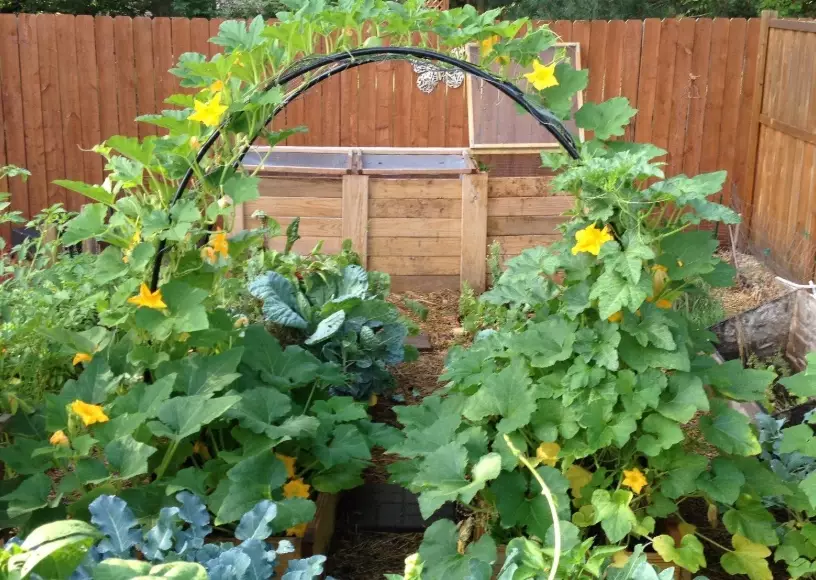
First, space efficiency. You can grow 2-3 plants in the ground space of one sprawling plant. For small gardens or raised beds, this is the difference between growing squash or not.
Second, disease prevention. Powdery mildew loves humid, stagnant air. A vertical vine has leaves exposed on all sides, drying faster after rain or watering. The University of California's Integrated Pest Management program notes improved air circulation as a key cultural control for many squash diseases.
Third, fruit quality. Squash resting on the ground develop flat, pale spots and are vulnerable to slugs, rodents, and soil-borne rot. Hanging fruit grows more uniformly and stays cleaner.
Finally, harvest ease. No more crawling through prickly vines to find a hidden spaghetti squash. You can see every fruit developing, which makes it easier to provide support when needed.
Choosing Materials & Design
The biggest mistake is underestimating the load. A mature winter squash vine with several fruits is a living, growing weight. Flimsy tomato cages or thin bamboo stakes will fail by midsummer.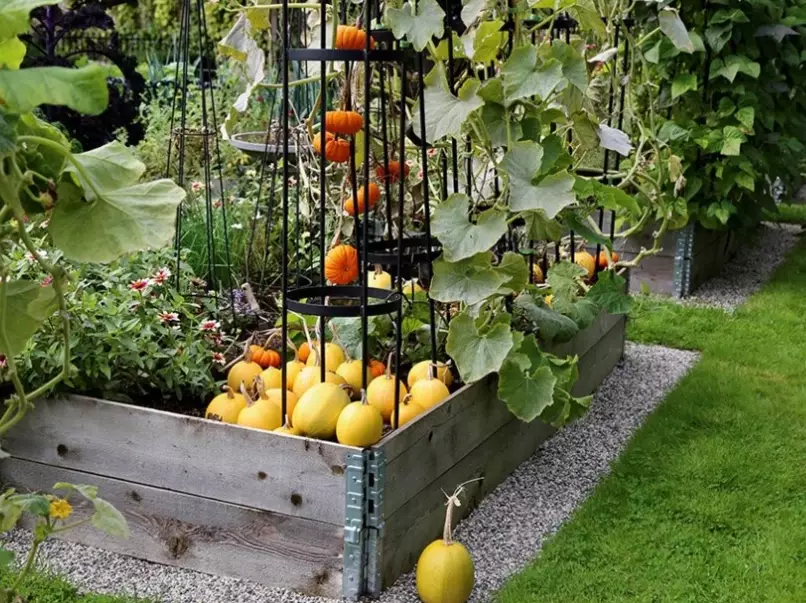
Material Showdown: Wood vs. Metal vs. Net
You need a framework and a climbing surface.
For the Frame (Posts & Crossbeam):
- Treated 4x4 Lumber: My go-to for permanent beds. It's stout, easy to work with, and lasts for years. Use ground-contact rated wood.
- Metal T-Posts or Sturdy Rebar: Cheaper and faster to install. You'll need a driver. They work well but offer less surface area for attaching a rigid climbing grid.
- What to Avoid: Untreated 2x4s (rot quickly), thin garden stakes, plastic poles.
For the Climbing Surface (The Grid):
For the Climbing Surface (The Grid):
- Cattle Panels or Welded Wire Fencing (4"x4" or 6"x6" grids): The gold standard. Rigid, strong, and the perfect grid for weaving vines and creating fruit slings. A 16-foot panel can be bent into a sturdy arch.
- Heavy-Duty Nylon Trellis Netting: A good, cheaper option. Get the kind with reinforced borders and at least a 6"x6" mesh. It must be pulled taut.
- What to Avoid: Bird netting (too flimsy), plastic pea netting (snaps under weight), chicken wire (small holes injure thick vines).
My favorite design for home gardens is the A-Frame Trellis. It's stable, provides two climbing sides, and creates a shaded area underneath perfect for growing shade-tolerant crops like lettuce or spinach.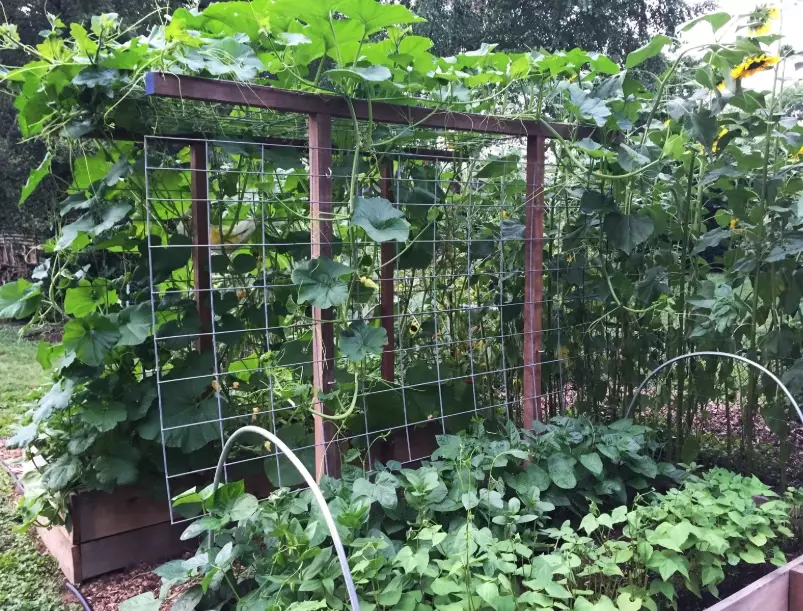
Step-by-Step Build: The A-Frame Trellis
Here's how to build a 7-foot long, 6-foot tall A-frame trellis using lumber and cattle panel. This will support 3-4 butternut squash plants easily.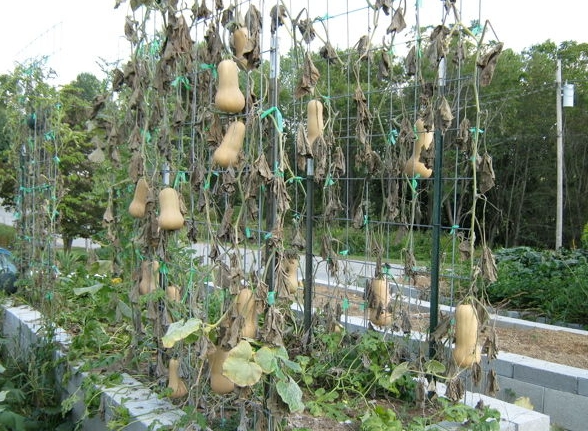
| Material | Quantity | Notes |
|---|---|---|
| 4x4 Pressure-Treated Lumber (8ft) | 4 | For the A-frame legs |
| 2x4 Pressure-Treated Lumber (8ft) | 2 | For the top and bottom crossbraces |
| 16ft x 50" Cattle Panel | 1 | Cut in half to make two 8ft panels |
| 3.5" Exterior Wood Screws | Box | Deck screws work great |
| Heavy-duty Zip Ties or Wire | 50+ | For securing panel to frame |
| Concrete Mix or Gravel | 2 bags | For setting posts (optional, for permanence) |
Step 1: Build the A-Frame Sides. Lay two 8ft 4x4s on a flat surface. Measure 6 feet from one end and place an 8ft 2x4 across them at that point—this is the top crossbrace. Screw it securely with two screws per leg. For extra stability, add a second 2x4 crossbrace about 18 inches from the bottom. Repeat to make a second identical A-frame side.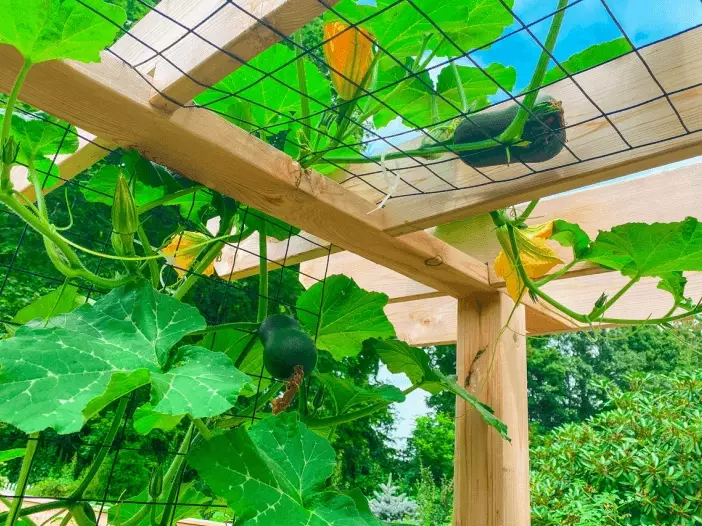
Step 2: Set the Frames. Position the two A-frames parallel to each other, 7 feet apart (the length of your cattle panel halves). If you want it permanent, dig four holes about 18-24 inches deep at the base of each leg. Set the frames in, use a level to make sure they're plumb and the top crossbraces are level with each other, then backfill with concrete mix or tamped gravel and soil.
Step 3: Attach the Cattle Panels. Have a helper hold one 8ft half-panel against the inside of the A-frame, resting on the bottom crossbrace. Use heavy-duty zip ties or galvanized wire every 12 inches to lash the panel firmly to the 4x4 legs and the top crossbrace. Repeat on the other side. Trim any sharp wire ends.
Step 4: Plant and Train. Plant your squash seeds or seedlings at the base of each side, about 2 feet apart. As vines grow, gently weave the main leader through the grid openings. Don't force thick stems; guide the flexible growing tip. Side shoots will naturally grab on.
Common Mistakes & Expert Tips
After a decade of vertical growing, I've seen the same errors repeated. Here's how to avoid them.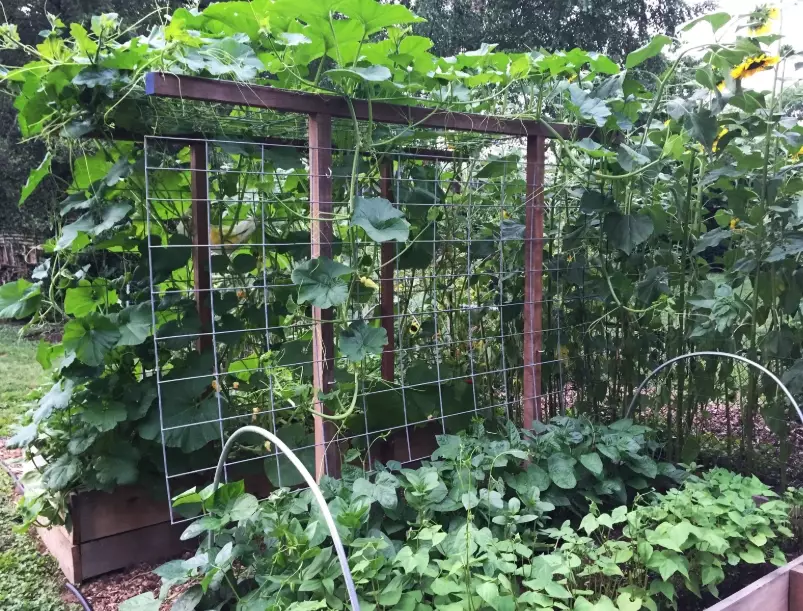
Mistake 1: Insufficient Support for Fruit. This is non-negotiable. A butternut squash develops over months. That tiny fruit in July will be a 4-pound weight by September. If it's hanging by just the stem, a windy day or heavy rain can cause it to tear off. Slings are cheap insurance.
Mistake 2: Placing the Trellis in Poor Light. Squash need full sun (6-8 hours minimum). Don't tuck your beautiful trellis against a north-facing fence or in the shadow of a tree. Orient it east-west so both sides get even sun exposure.
Mistake 3: Letting Vines "Grip" Too Tightly. Squash vines use tendrils to climb. In a rigid grid, these tendrils can constrict and girdle the vine itself as it thickens. Every few weeks, check where the vine passes through the grid. If it looks pinched, gently loosen the tendril or widen the opening slightly with wire cutters.
An Expert Tip on Watering: Vertical plants dry out faster. Drip irrigation or a soaker hose run along the base is ideal. It delivers water to the roots without wetting the foliage, which helps prevent that dreaded powdery mildew. Hand watering works too, but be thorough—water long and deep, not just a surface sprinkle.
Your Trellising Questions, Answered
Building a trellis for your winter squash might seem like an extra weekend project, but the payoff lasts all season. You'll gain space, lose fewer fruits to rot, and end up with a garden that's easier to manage and more productive. Start with a simple A-frame for your butternuts this year. Once you harvest those clean, perfectly formed squash from eye level, you'll never go back to letting them sprawl.
Reader Comments